Are you curious about which digital trends will impact e-commerce SEO in 2024? We have analyzed the e-commerce line of business using Serpstat Market research data and experts’ comments. This in-depth investigation will explore the trending top 5, focusing on AI, sustainability, and exciting SEO tendencies and Top 5 E-commerce SEO Trends in 2024.
Analysis of SEO Trends Shaping the E-commerce Industry
Typically, e-commerce experts track Revenue, Traffic, and Visibility as their most critical success metrics. In our research, we will start gathering data considering these valuable indicators. The updated Serpstat Market research helps to find SEO Traffic, Visibility, Organic keywords, Referring domains, Backlinks, and SDR (Serpstat Domain Rank). It will be the basement of our research, 100 domains, and their metrics (10 domains in 10 e-commerce subcategories).
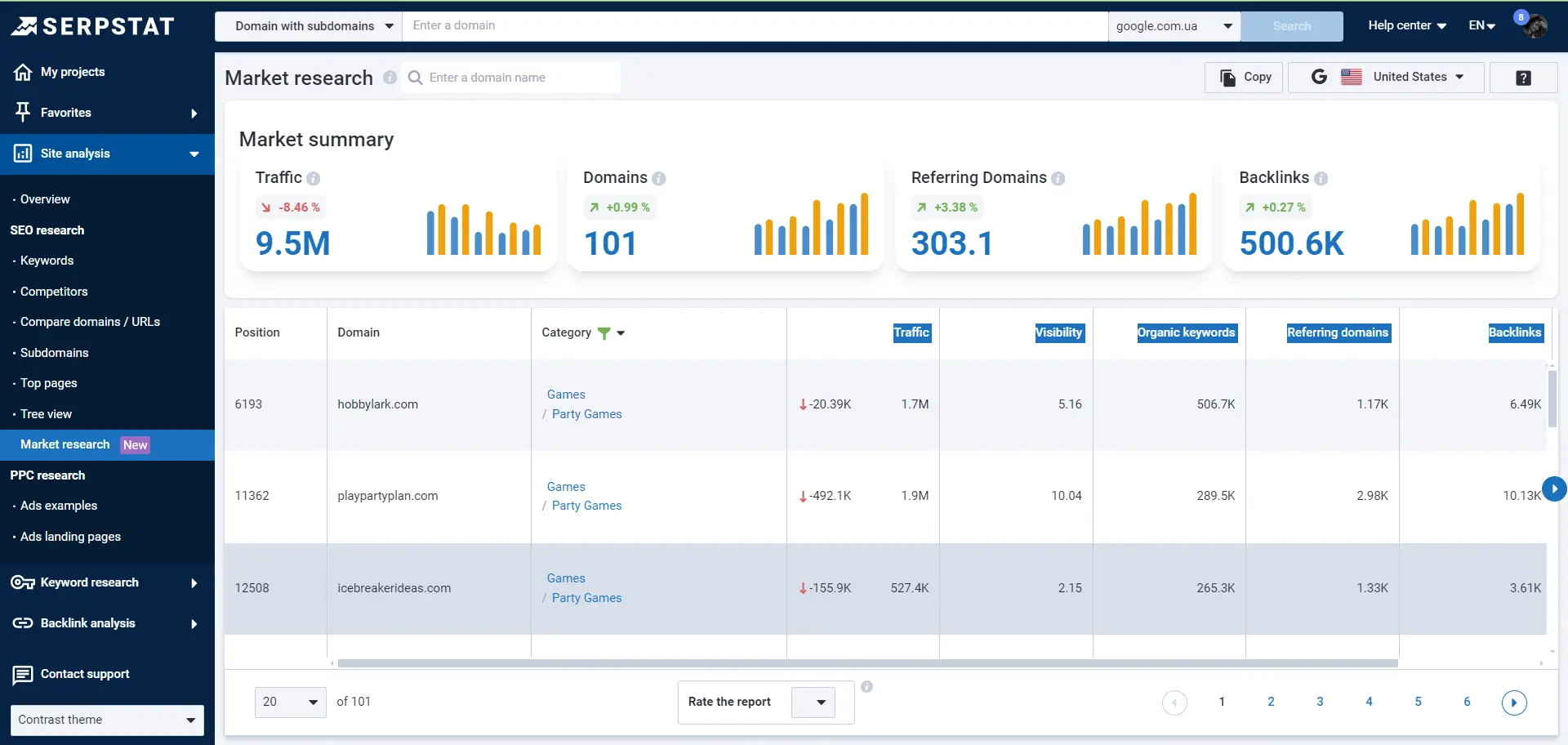
We analyzed the Market summary panel for each e-commerce category using the US search database. Shopping portals like eBay, Amazon, and AliExpress, as well as mass merchants such as Target and Walmart, dominate SEO traffic.
Ecommerce SEO Strategies You Can Execute Today
To truly stand out in the crowded ecommerce market, businesses need a solid SEO foundation tailored to today’s trends and tomorrow’s demands. In this section, we’ll cover the top 5 ecommerce SEO strategies that will improve your rankings, foster meaningful engagement, and drive conversions.
Strategy 1: Create Product Category Pages to Target Buying Keywords
Optimized product category pages are crucial for ecommerce because they allow you to target broader. It is high-intent keywords that match what shoppers search for when looking to buy. Unlike individual product pages, category pages help capture customers who aren’t sure of the exact item they want but have a clear idea of the type of product they’re after—like “women’s running shoes” or “wireless headphones.”
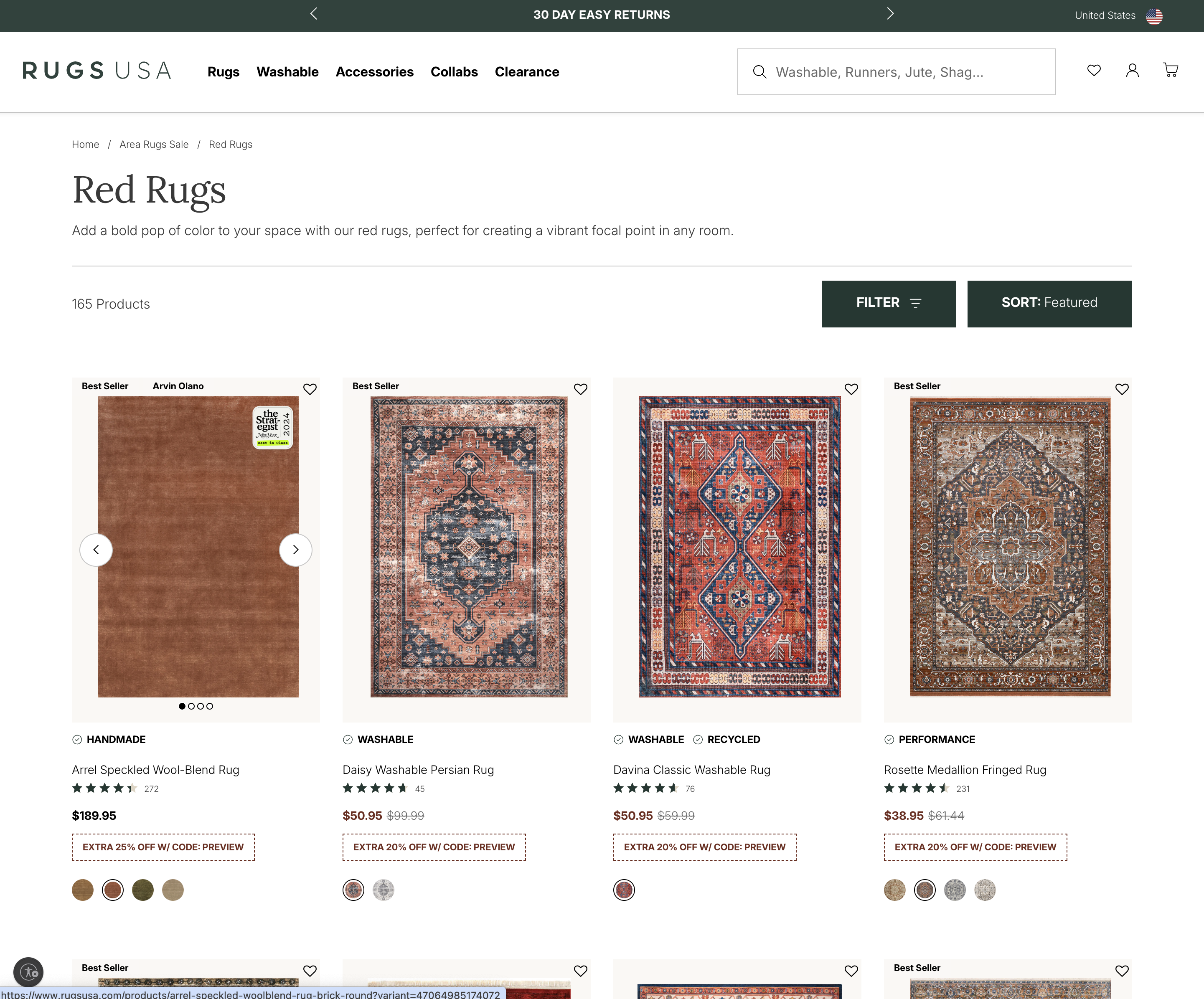
Strategy 2: Optimize Individual Product Pages to Target Bottom-of-Funnel Shoppers
Strategy 2: Optimize Individual Product Pages to Target Bottom-of-Funnel Shoppers
Bottom-of-funnel shoppers are customers who are close to making a purchase decision. Your product pages need to clearly capture that high purchase intent by focusing on specific keywords and strategic page elements. Start by integrating high purchase intent keywords—like “buy [product name]”—directly into your page titles, headers, and meta descriptions. This approach targets shoppers actively looking to make a purchase. For example, a product page titled “Buy Black Nike Air Max 270 Size 9” captures the intent and directly addresses what searchers are seeking.
Strategy 3: Create Listicle & Review Content to Target Shopping Keywords
Listicle and review content are powerful ecommerce SEO tools for targeting shoppers who are in the research and comparison phase of their journey. They naturally rank well for high-value shopping keywords—phrases like “best men’s running shoes” or “top laptops under $500”—that potential buyers use to weigh their options. By creating engaging, informative listicles and reviews, you’re tapping into a popular format that resonates with comparison shoppers and captures their search intent.
Strategy 4: Review Competitor Products Through Video, Written Content, & Rating Systems
Reviewing competitor products directly on your site is a smart strategy to capture shoppers in the research phase of their buying journey. As shoppers look to make informed comparisons, they’re drawn to sites that provide comprehensive, unbiased reviews. By offering in-depth comparisons of competitor products, you position yourself as a valuable resource and keep potential buyers engaged.
Strategy 5: Use User-Generated Content to Improve SEO & Build Trust
User-generated content (UGC) is a powerhouse for ecommerce SEO and an invaluable trust builder. When customers share their reviews, photos, and videos, they create fresh, unique content that search engines value. UGC is organic input that instills confidence in future buyers by providing authentic perspectives on your products. You can achieve better SEO with UGC by encouraging customers to leave reviews, upload photos, and engage in Q&A sections.
Leverage Internal Linking to Boost Product Page Rankings
An effective internal linking strategy is key to maximizing link equity across your ecommerce site. It ensures your most important product and category pages are easily accessible and rank higher in search results. Start by linking relevant blog content to your product pages. For instance, a blog post on “Best Camping Gear” is an ideal place to link to product pages for tents, sleeping bags, and other camping essentials. This funnels readers directly to products they’re interested in and helps search engines understand which pages on your site are most valuable.
Optimize for Mobile Shopping & Core Web Vitals
Ecommerce is a mobile-first world, which makes optimizing for mobile users a necessity, not an option. Seamless mobile shopping experiences are crucial for retaining visitors and reducing negative user signals like high bounce rates. When users quickly exit a page or return to Google, it sends “negative signals” to Google’s algorithm, suggesting that your site may not be meeting their needs, which can result in lost rankings. To create a positive mobile experience, optimize your page load speeds. Slow-loading pages drive users away.
How to Perform Keyword Research for Your Ecommerce Store
Keyword research is the cornerstone of any successful ecommerce SEO strategy. It drives the right traffic and matches shoppers with their buying intent, increasing the likelihood of conversions. You can use keyword research tools like Google Keyword Planner, Semrush, and Ahrefs to uncover the keywords that matter most. When performing keyword research, you must distinguish between buying intent and research intent keywords.
- Related post: What is long tail keywords
- Related post: What Is Off-Page SEO?
- Related post: What Is Alt Text? Examples & Best Practices
- Other post: How Many Pages Does a Website Need?
- Other post: What Is an Internal Linking
- Other post: What is the Google Algorithm Update