Long tail keywords are search queries that are longer and more specific than commonly used keywords. They usually contain three or more words that produce more specific results. Long tail keywords have a higher conversion rate but relatively low search volumes and less competition. They are called “long-tail” because if you plot all the keyword searches on a search demand curve, these will appear at the “long tail” end of the graph, representing less common, more niche search terms. Here we explore what is long tail keywords.
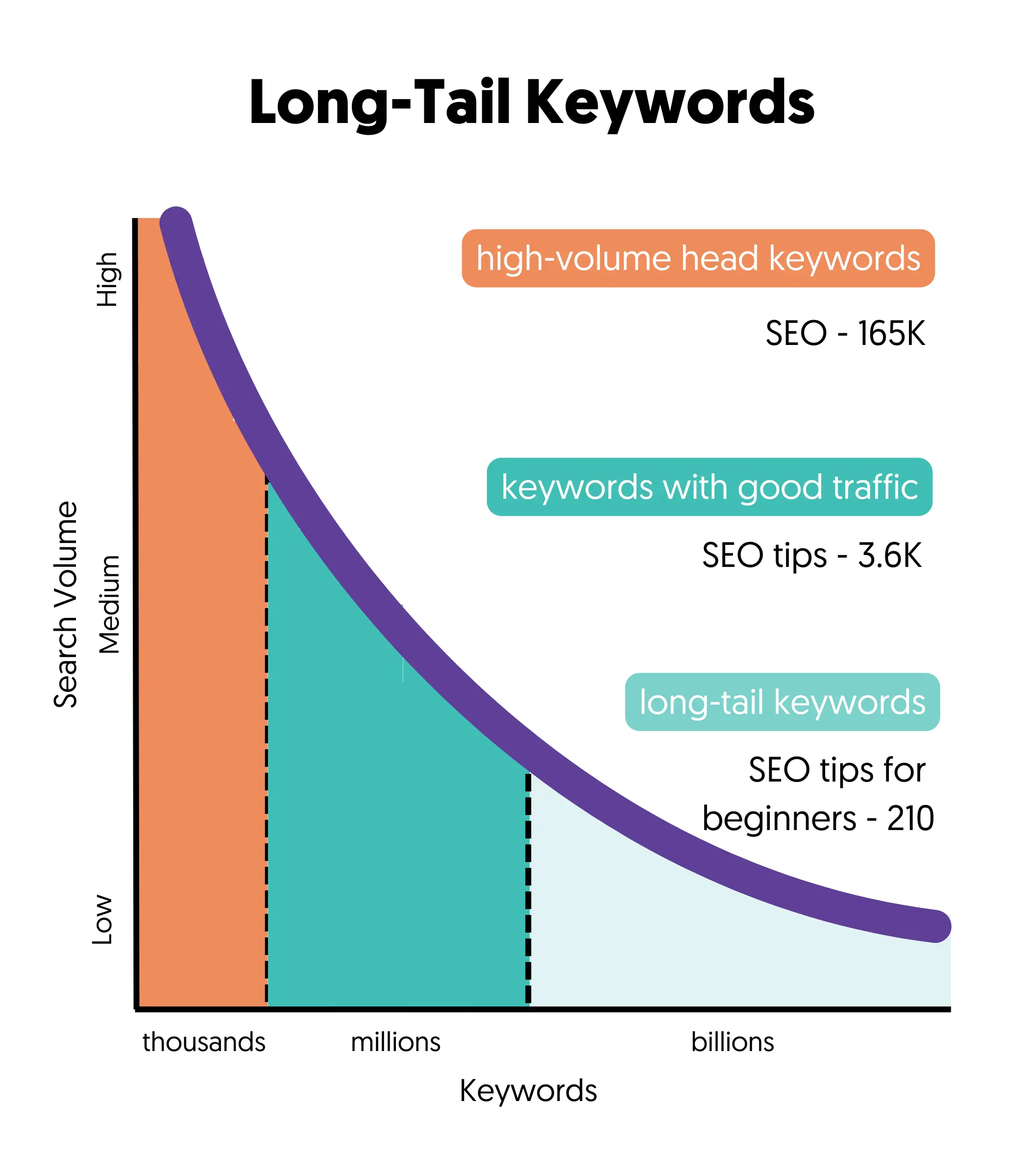
Benefits of Targeting Long-Tail Keywords
Long-tail keywords are important because they allow you to target niche demographics. These keywords have less competition and a higher conversion rate than head keywords. Other benefits of using long-tail keywords in your SEO strategy include the following:
Long keywords match the user’s intent: To understand the benefits of long-tail keywords, you need to understand the concept of intent. Put yourself in the searcher’s shoes momentarily while you think about the customer journey.
Long keywords are easier to rank than non-long tail keywords: Provided you have a high-quality website, long tail keywords are easier to rank, especially if you choose low-competition keywords.
There are more long keywords than head keywords: There are nowhere near as many head keywords as long tail.
Long keywords have higher conversion rates: If you think about it for a second, those users that use long tail keywords to search for something can be considered more targeted because they already made an effort to make their search terms more specific.
How To Find Long Tail Keywords
Here are the most proven techniques for finding long keywords for your website.
- Utilize Google Search Features
- Try ChatGPT or Other AI Tools
- Use Keyword Research Tools
- Find Your Competitor’s Keywords
- Explore Popular Forums
- Try Google Ads Keyword Planner
1. Utilize Google Search Features

You can use certain Google search features to get ideas for long-tail keywords. Although the process is manual, it is still an effective way to understand your niche. The first feature is the Google Autocomplete. Go to Google and enter your head keyword into the search box. While typing, you’ll get many ideas of related keywords.
People Also Ask
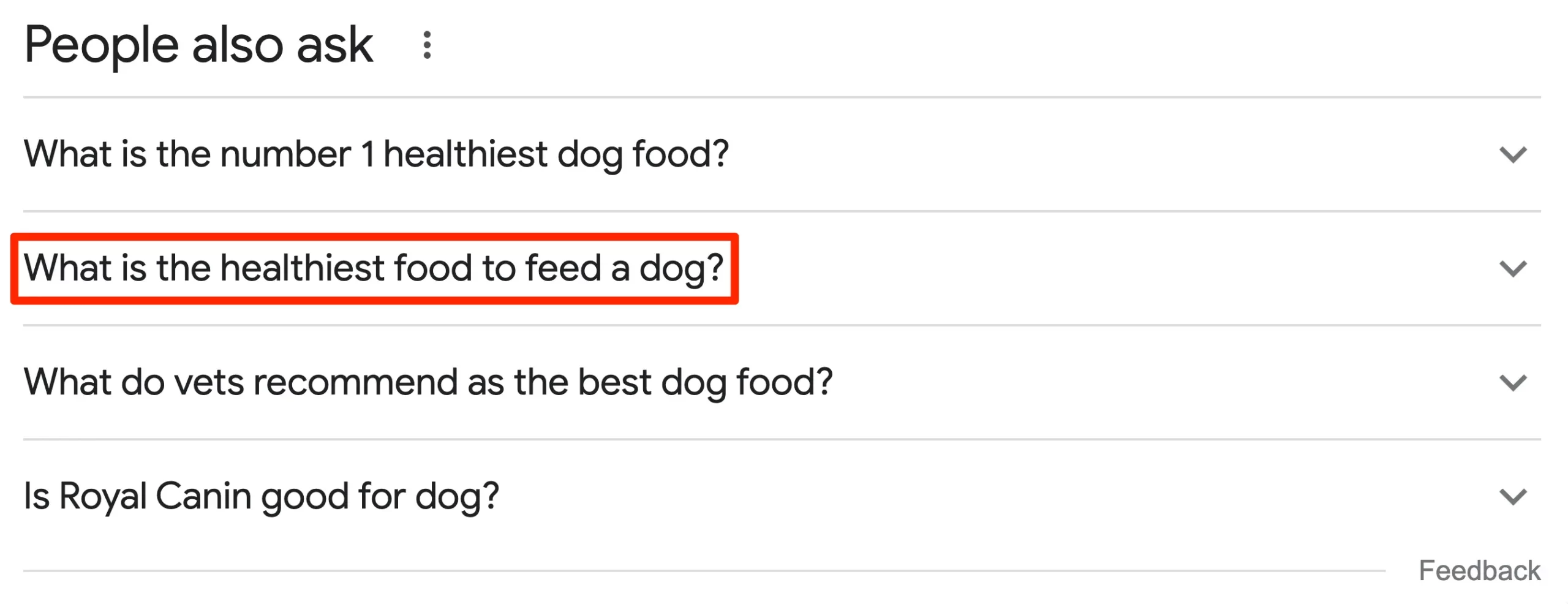
Another place to look for long-tail keywords is the ‘people also ask’ section. These are usually question-based keywords that are great candidates for targeting with content.
2. Try ChatGPT or Other AI Tools
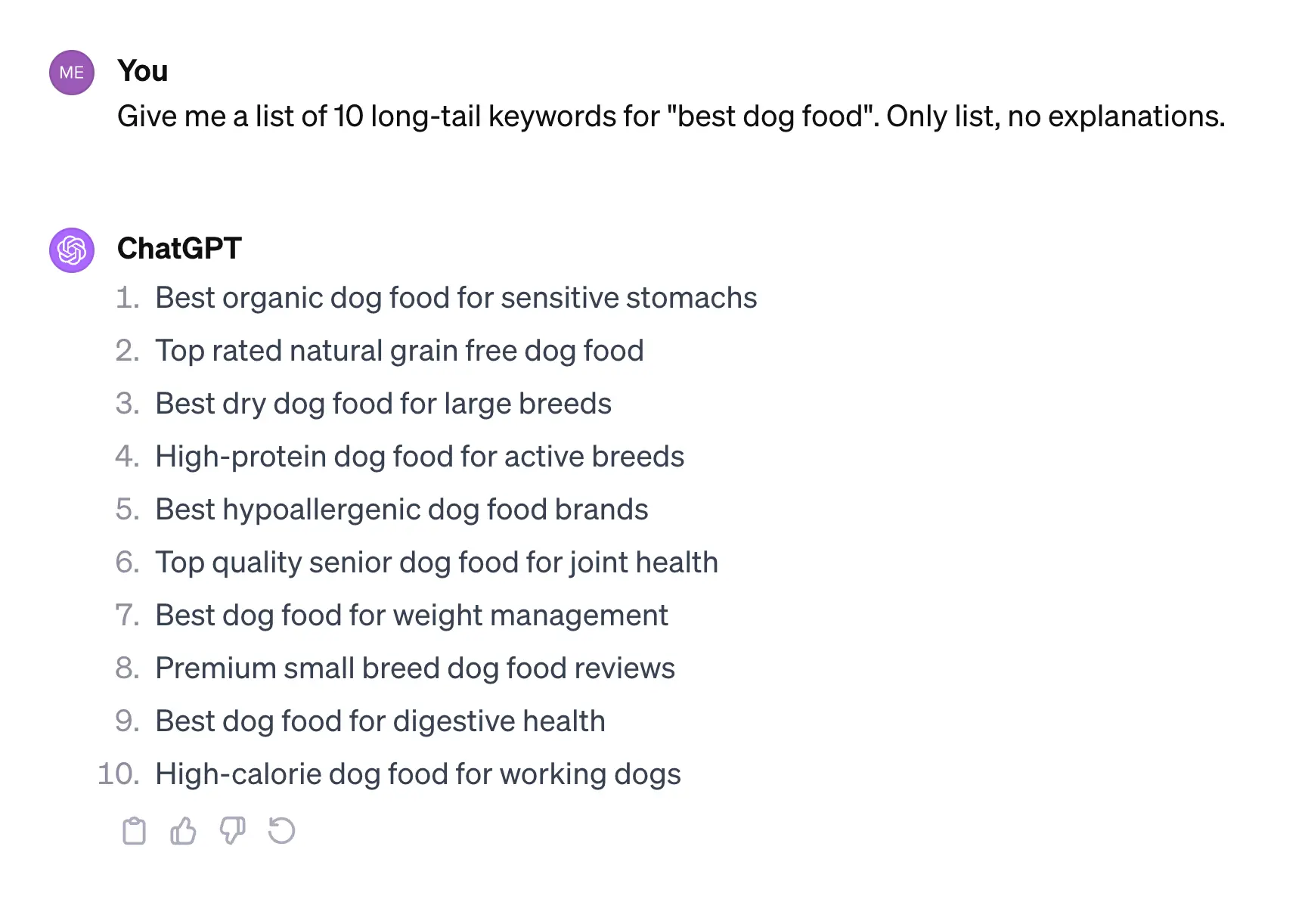 A faster way to find long-tail keywords is to use ChatGPT or other AI tools (like Google Bard). You can try different prompts to create a list and export them into CSV. You can then import them into a keyword research tool and see which AI suggestions are a good fit.
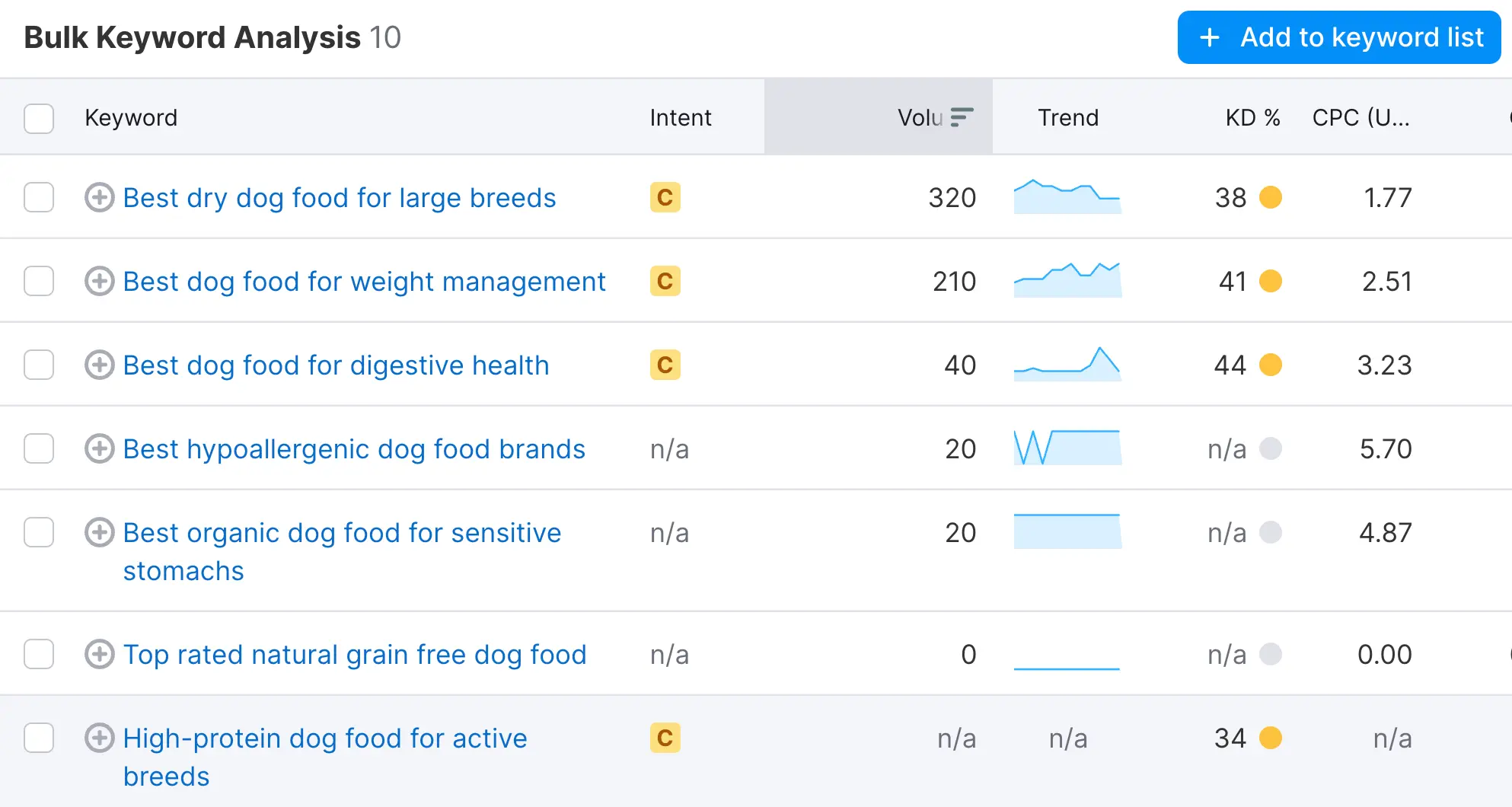
We then analyzed them in Semrush. As you can see below, some have low keyword difficulty and a decent monthly search volume, making them ideal long-tail keywords for our campaign.
3. Use Keyword Research Tools
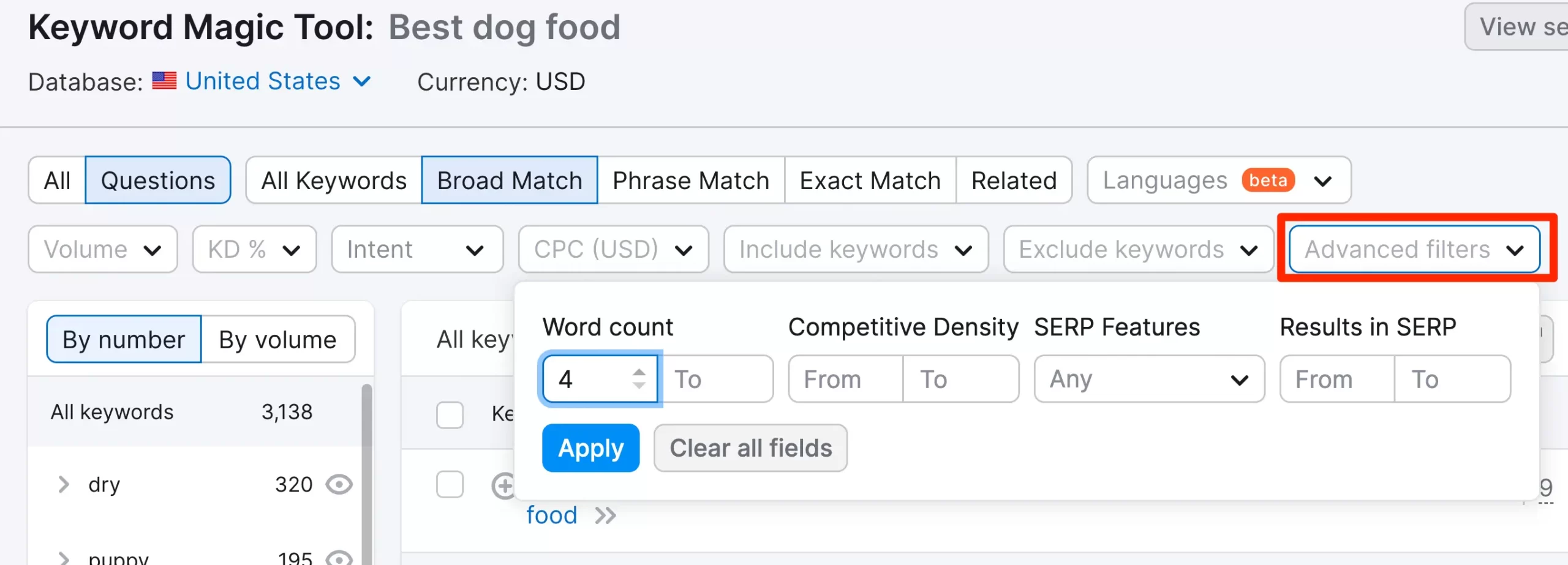
One of the easiest ways to identify long-tail keywords is to use a tool like Semrush or Ahrefs. We’ve also used the Keyword Difficulty (KD) filter to show keywords that have less than 40% KD and are thus easier to rank for.
In the example below, we’ve used Semrush Keyword Magic Tool to search for “best dog food”. We’ve then selected “Broad Match” and used the “Advanced filters” to show search queries of 4 words or more.
4. Find Your Competitor’s Keywords
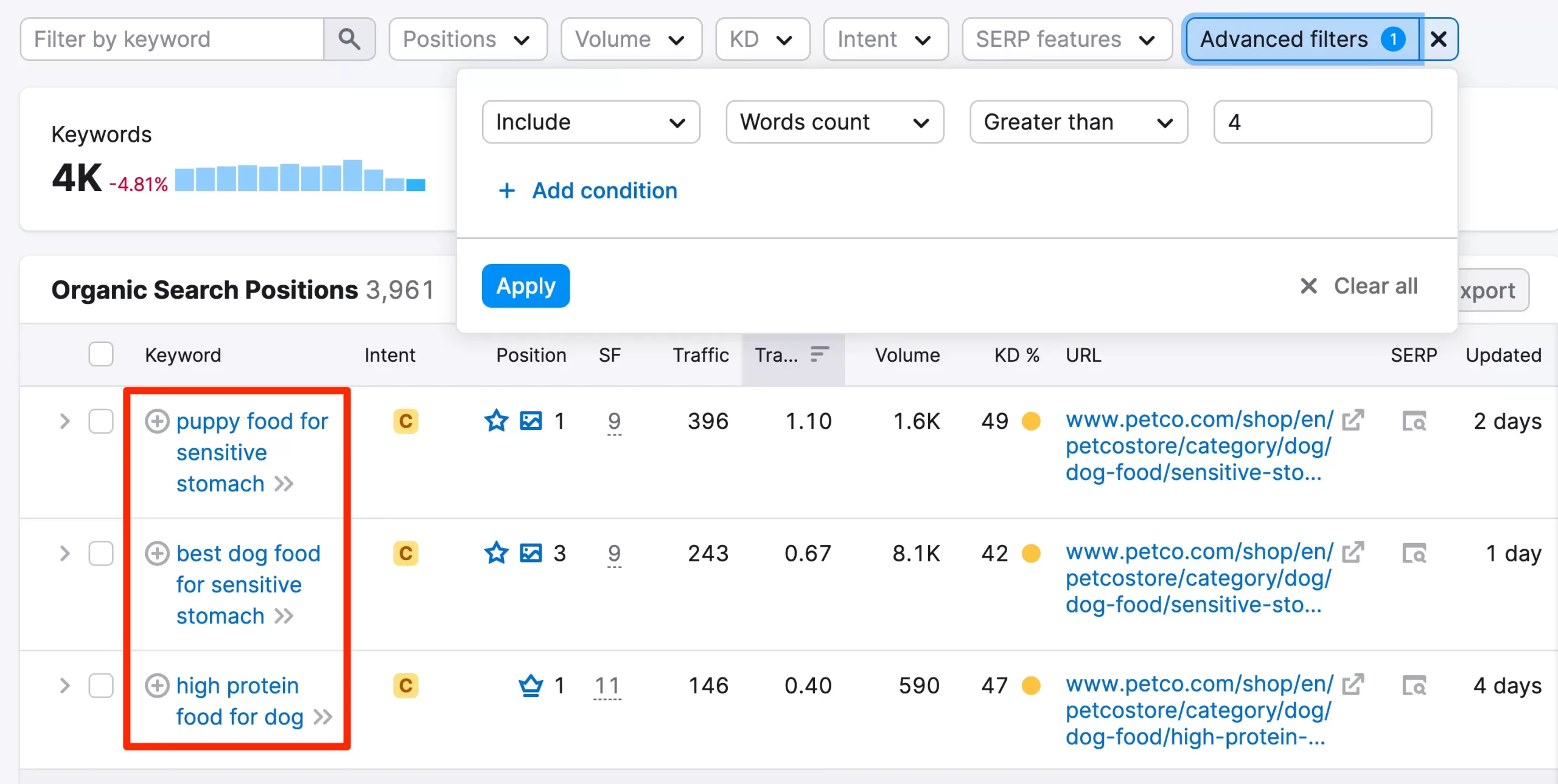
There is no niche without competition, so finding your competitor’s keywords is a good approach to understanding their tactics and strategies. You can reverse engineer their rankings and find for which long-tail keywords they rank on Google. The process is straightforward. You enter a competitor’s domain in a keyword tool and analyze the keyword rankings. You can use the advanced filters to see which long-form queries they rank for and how much traffic they get.
5. Explore Popular Forums
Another way to find question-based queries is by looking at popular forums like Reddit, Quora, or niche-specific forums. When you execute a search on Google, it displays popular questions in the “Discussions and forums” sections.

A nice trick to find popular questions on individual forums is to perform a search using the “forum name target keyword.” Look at the example below. It shows the most popular Reddit questions related to dog food.

6. Try Google Ads Keyword Planner
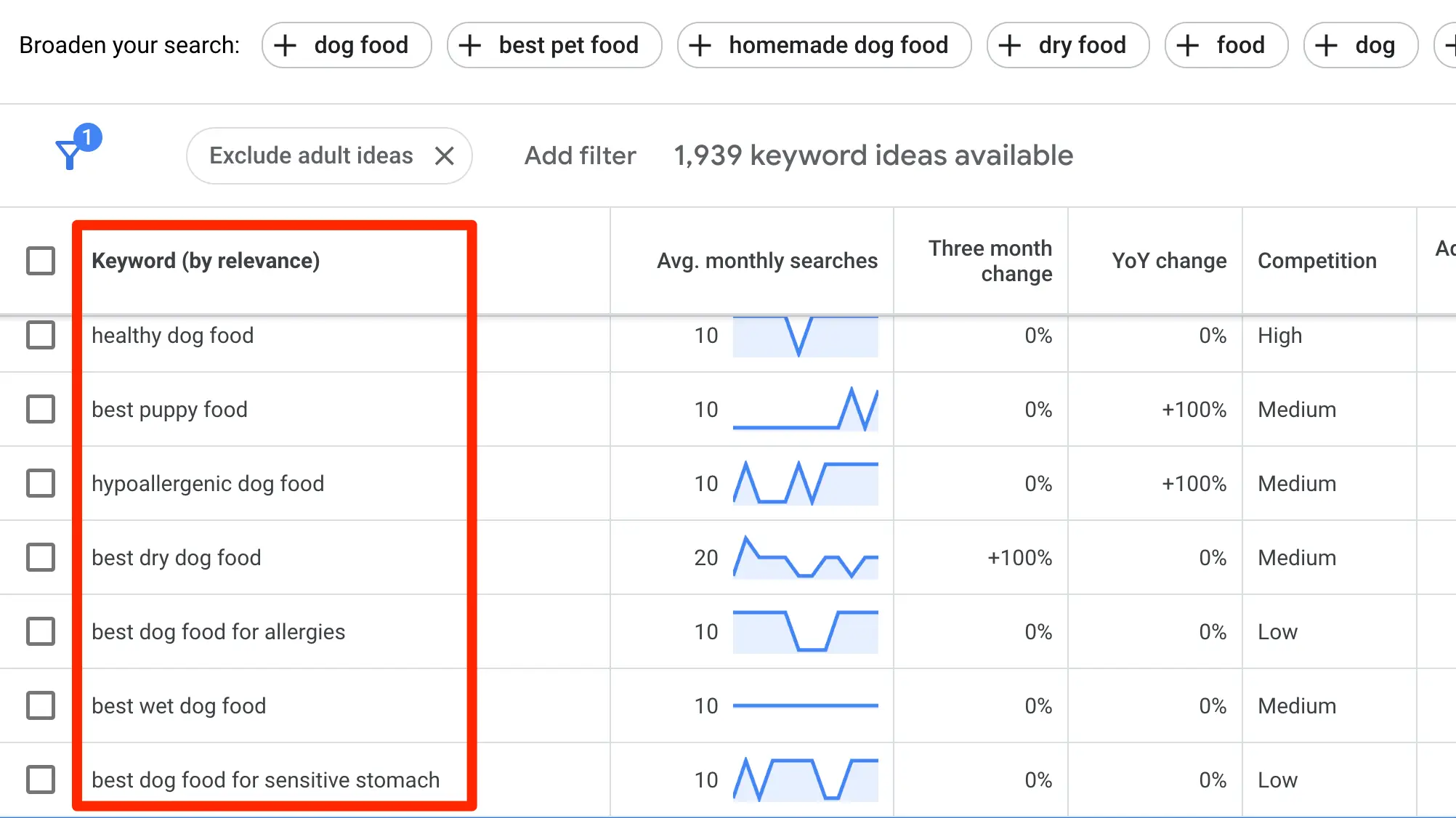
Another less popular keyword research method is using the Google Ads keyword planner. The tool is free for Google Ads customers and can give you ideas with average monthly searches.
How to Use Long Tail Keywords
Once you’ve identified a list of long-tail keywords to use in your SEO campaigns, the next step is to incorporate them into your content strategically.
Target Long Keywords with New Content
Create content targeting each long-tail keyword. Ensure the content aligns with the search intent and addresses your audience’s queries.
Group Related Content Into Topic Clusters
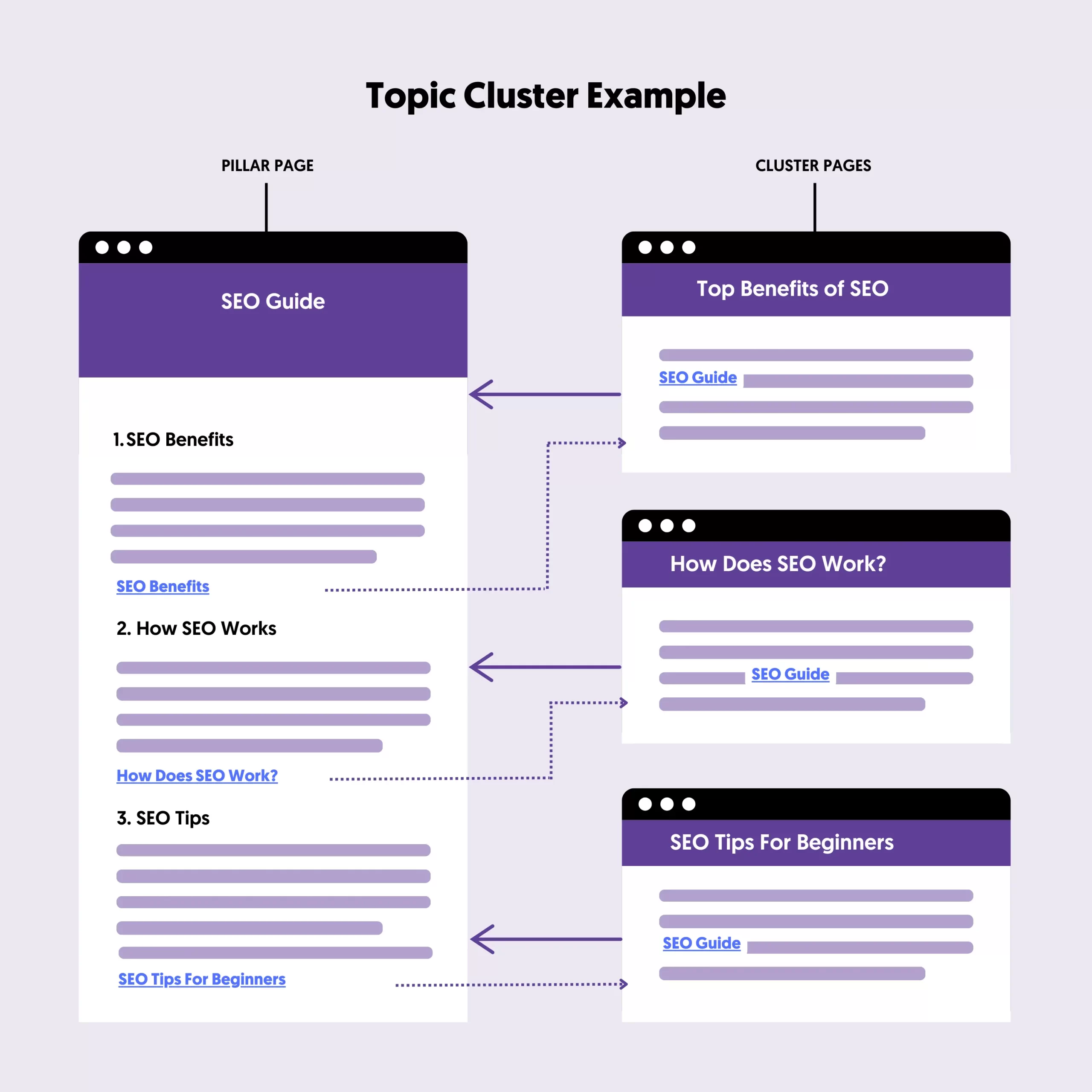
After creating content for each long keyword, you can organize these pieces into topic clusters. Clustering helps establish authority on the subject, allows you to rank for head keywords, and enhances the user experience by providing comprehensive information in an organized way.
Use Keywords In Your Content – Another essential strategy is to use these keywords in key areas of your content:
- Put the keyword at the start of the headline (and title tag!)
- Use the keyword in the URL.
- Make sure your title is in an H1 tag
- Use the keyword throughout your H2 subheadings
- Use the keyword in the first 100 words
- Use a few variations of the keyword throughout the body of the article.