With so much content published online every day, standing in search results only takes more than keywords. Google is constantly refining how it evaluates the material to get users accurate, reliable and useful information. This is the place where E-E-A-T comes in the game in SEO. If you have ever wondered what EET is in SEO, it refers to a set of quality principles – experience, expertise, authority, and reliable – which helps the search engines determine how reliable your content is. Let’s dive deep into this concept and find out how you can improve the bricks of your website in SEO.
What Does E-E-A-T Stand For?
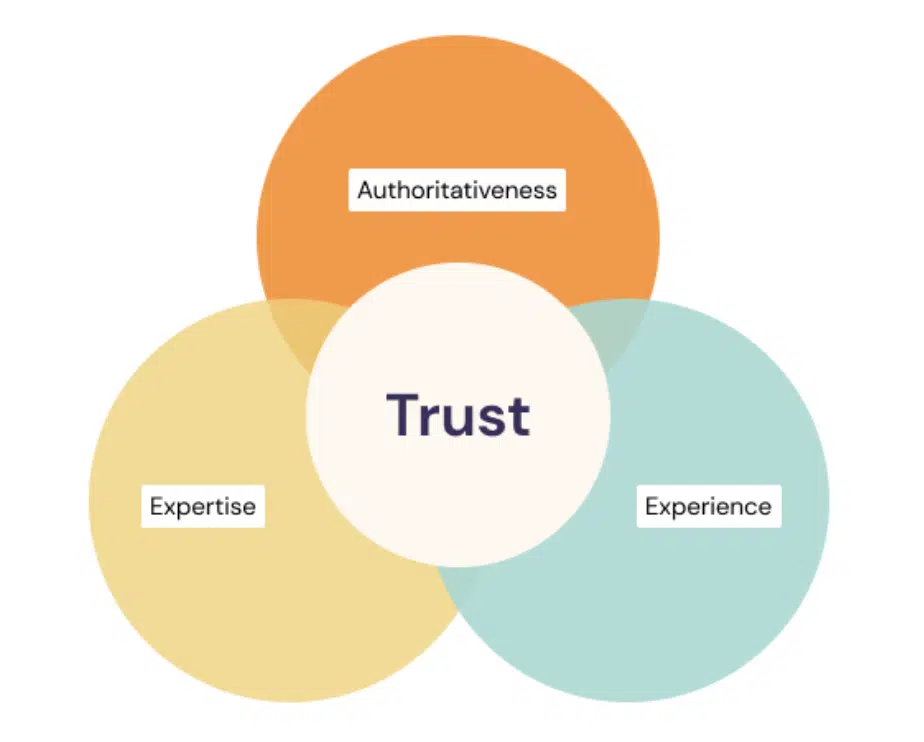
The E-A-A-T stands for experience, expertise, authority and Reliable Ness. This is a concept from Google’s search quality evaluation guidelines that help assess the reliability and quality of the material. Strong E-E-E-T signals can improve the chances of ranking in the search results of your website. We will break each element below so that you can help understand how they affect your SEO strategy.
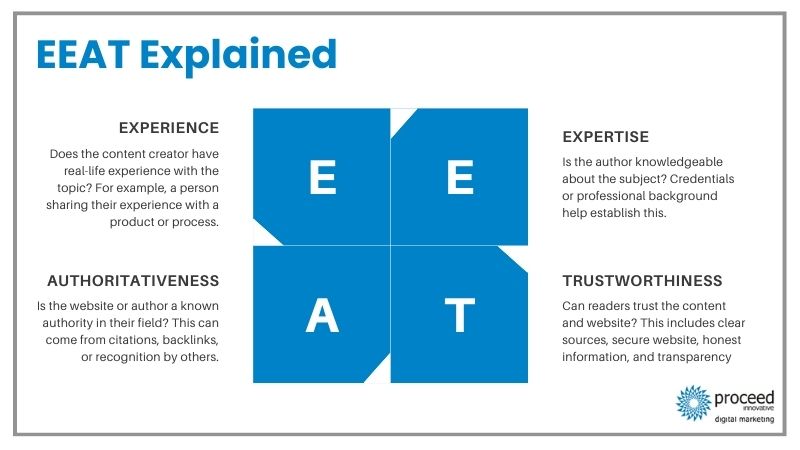
Experience

In the E-E-A-T, the experience already refers to the participation of a material manufacturer, which they cover with the subject they are covering. This may include using a product, going to a place or undergoing a specific situation. Google is in favor of the material written by those who have experienced what they are talking about, because it connects the depth, authenticity and real-world value. Experience can also be related to how users interact with your website. A site that is easy to navigate, visually improves clean and well -structured overall user experience, leading to more likely to live and attach visitors.
Expertise

Specialization in E-A-T refers to the depth of knowledge and ability. A material manufacturer brings into a specific subject or industry. This is especially important for (your money or your life) content, such as health, legal, or financial advice, where accuracy directly affects the readers’ lives. Google is in favor of material that shows formal education, experience on hands or industry-recognized expertise.
Authoritativeness
Authority is a website or material manufacturer recognized within their industry or niche. It has been determined by factors such as a strong backlink profile, reference to other reliable sources, quality of coherent materials and user trusts over time. The Google Authority also sees the time and bounce rates on the site to assess the engagement matrix. High quality backlinks from respected websites, mentioning by industry leaders, and a long -standing web attendance all contribute to the authority of a site.
Trustworthiness

Trustworthiness measures how reliable, transparent and safe for users a website for users. Google evaluates whether users may feel confident in the objectives of the site and its data security practices. Major indicators include https safety, clear contact details, transparent author, quotes and privacy and adherence to moral standards.
E-E-A-T vs. E-A-T: What’s the Difference?

The E-A-T stands for expertise, authority and reliability-three major factor uses to evaluate the quality of Google material. At the end of 2022, Google added an additional “e” to the experience, turning it to E-E-A-T. This joint already highlights the value of knowledge or personal participation with the subject matter.
The difference lies in this additional focus: while E-A Tis emphasizes what you know and how much you trust, E-E-A-T also believe how closely you have interacted with the subject. Together, they help provide more reliable and useful ingredients to the search engine.
What is YMYL and How is it Related to E-E-A-T?

YMYL stands for your money or your life-a word used by Google that can affect a person’s health, finance, security or overall well-being. Due to its potential results, Google holds YMYL content at a very high level.
This is the place where E-A-A-T becomes necessary. To rank well, YMYL content must clearly display experience, expertise, authority and reliable Ness. Whether it is medical advice, legal guidance, or financial tips, Google hopes that this material will come from reliable sources with real knowledge and integrity to protect users from loss.
Timeline: How E-E-A-T Evolved in Google’s Guidelines

Google’s approach to content quality has evolved over the years to better serve users with accurate and trustworthy information. Here’s a quick timeline of how E-E-A-T came to be:
- 2014 – Google introduced E-A-T (Expertise, Authoritativeness, Trustworthiness) in its Search Quality Evaluator Guidelines to help assess content quality, especially for YMYL (Your Money or Your Life) pages.
- 2018 – E-A-T gained more attention with Google’s Medic Update, impacting sites offering health, finance, and legal advice.
- 2022 – Google added a new “E” for Experience, evolving E-A-T into E-E-A-T. This addition emphasized the importance of firsthand knowledge and real-world involvement with the topic.
Is Google E-E-A-T a ranking factor?
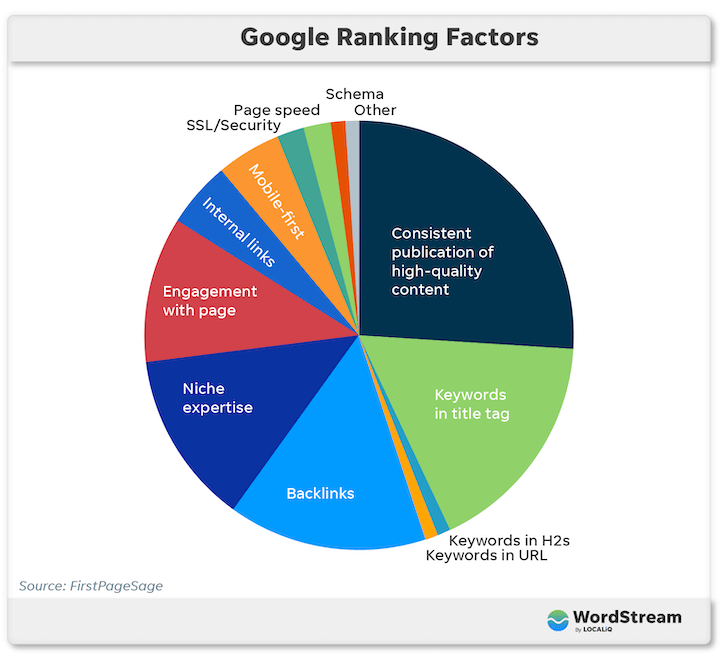
Although E-A-T is not a direct ranking factor, it is an important idea for SEO as it affects the quality and reliability of the material, which are factors that can eventually affect the search engine ranking. Google’s E-T guidelines are especially important for websites of many industries, such as health and finance, where accuracy and credibility of information is important.
Is E-E-A-T really important for your business?
Yes! E-AT is incredibly important for businesses that rely on their website to generate leads and revenue. E-A-T is an important factor that uses to assess the quality and reliability of Google websites and content, and this search can significantly affect the engine rankings. To prefer E-E-A-T in online content, you should focus on providing precision and updated information, citing reliable sources and establishing your expertise and rights in your respective industry. You can get it through the leadership content, industry participation and cooperation, and positive customer reviews and trends.
Can AI Help You Optimize for E-E-A-T?
AI can simulate human experience by making a huge dataset, user behavior and drawing from existing materials to produce reference-rich materials. Although it does not experience subjects individually, it can help reflect real -life scenarios or user trips if it is directed with accurate signs, data or firsthand inputs from human experts. To really display experience, mix individual anecdotes, reviews or user with case studies.
Can AI Demonstrate Expertise?
YES-AI can help organize and present expert-level material based on reliable sources, industry research and technical knowledge. However, it should be used as a material accessory instead of the sole manufacturer. The best approach is AI draft materials which are later reviewed, edited and approved by qualified professionals to ensure accuracy and reliability, especially for YMYL (your money or your life) subjects.
Can AI Build Trustworthiness?
By maintaining the stability of AI material, avoiding factual errors (when combined with human inspection) can support confidence, and can ensure that your site follows SEO and creates best practices. This structure can help in privacy policies, FAQs and compliance pages – but transparency and authenticity still need human touch. This is necessary for confidence to publish the author, cite sources and clarify the ownership of the material.
Google’s View on AI-Generated Content
Google does not punish the AI-generated material only to be machine-made. Instead, it evaluates material based on E-A-A-T principles and overall assistants. If the AI-generated material is accurate, valuable, and aligns with the intention of the user, it can rank well. However, purely made materials for the search ranking without real value, can still be flagged as low quality. Google encourages transparency and clearly explains when and how AI is used in your content strategy.
How to Measure the Impact of E-E-A-T on Your Website

Measuring the impact of E-E-A-T on your website helps you understand if your SEO and content improvements are paying off. While E-E-A-T itself isn’t a direct ranking factor, its influence shows through key performance indicators. Here’s what to track:
- Organic traffic growth – A steady increase suggests your content is resonating with users and search engines.
- Keyword rankings – Improved positions for target keywords indicate stronger perceived relevance and authority.
- Bounce rate and time on site – Lower bounce rates and longer sessions hint at better user experience and trustworthy content.
- Quality backlinks – More links from credible websites signal growing authority.
- Customer reviews and online mentions – Positive feedback adds to your trustworthiness and reputation.
- Related post: What is long tail keywords
- Related post: What Is Off-Page SEO?
- Related post: What Is Alt Text? Examples & Best Practices