
Duplicate content is one of the most overlooked yet damaging issues in SEO. When your website contains identical or very similar content across multiple pages, search engines struggle to determine which version to index or rank. This can lead to reduced visibility, lower search rankings, and a drop in organic traffic. While it’s not always penalized outright by Google, it can dilute your page authority and hurt your SEO efforts. Understanding why duplicate content matters and how to fix it is essential for maintaining a strong and competitive online presence. In this guide, we’ll break down the risks and provide actionable steps to resolve duplicate content effectively. Here we discuss Why Does Duplicate Content Hurt SEO and How Can You Fix It?
Understanding Duplicate Content and Its Impact on SEO
Duplicate content refers to instances where identical or nearly identical content appears on multiple web pages, either within a single website or across different domains. This poses a significant challenge for search engines like Google, as they aim to deliver the most relevant and valuable content to users. When duplicate content exists, search engines struggle to determine which version is the most authoritative or should be displayed in search results. This can lead to indexing issues, lowered rankings, and diluted SEO efforts. Additionally, search engines may filter out duplicate pages or consolidate their ranking signals, often resulting in unintended visibility loss.
Types of Duplicate Content: Internal and External
Duplicate content is categorized into two main types: internal and external. Internal duplicate content occurs when similar or identical content exists within the same domain, often due to poor URL structures, tracking parameters, or multiple versions of a page. External duplicate content, on the other hand, happens when the same content appears on different websites. This can be the result of content scraping, syndication, or businesses using manufacturer-provided descriptions without modification. Both types of duplicate content can significantly reduce a website’s authority and credibility in search engine rankings. Internal duplication can cause search engines to index the wrong page, while external duplication may lead to loss of ownership over original content. To maintain strong SEO performance, businesses must carefully manage their content and ensure it remains unique and valuable.
How Duplicate Content Confuses Search Engines

Search engines prioritize delivering the most useful and relevant results to users. However, when multiple pages contain the same or similar content, search algorithms struggle to determine which page should rank highest. This confusion can lead to improper ranking distribution, where a less relevant or less optimized page appears instead of the intended one. Additionally, duplicate content can cause search engines to suppress certain pages from being indexed, as they try to prevent redundancy in search results. When multiple versions of the same content exist, link equity and traffic are split between them, reducing the overall effectiveness of SEO efforts. This also opens opportunities for competitors to rank higher if their content is perceived as more original or authoritative. To avoid such issues, webmasters must take active steps to ensure content uniqueness, proper URL structuring, and use of canonicalization techniques.
The Negative Effects of Duplicate Content on Rankings
One of the most serious consequences of duplicate content is its negative impact on search engine rankings. When search engines encounter multiple versions of the same content, they often struggle to decide which page is the most relevant. This results in a dilution of ranking potential, where multiple duplicate pages compete against each other instead of consolidating their SEO value into one authoritative page. Moreover, Google may apply a duplicate content filter, effectively removing some pages from search results altogether. In extreme cases, websites engaging in excessive duplication—especially through content scraping—may face penalties, including de-indexing from search engines. Additionally, duplicate content can lead to a poor user experience, as visitors might land on redundant pages instead of the most valuable or updated version. To protect rankings, businesses must regularly audit their content, implement proper redirects, and ensure each page provides unique, meaningful information.
How Duplicate Content Affects Link Equity
Link equity, also known as link juice, is a crucial factor in determining a website’s authority and search rankings. When duplicate content exists, inbound links to similar pages get divided, weakening their collective SEO strength. Instead of consolidating backlinks to a single authoritative page, multiple versions dilute the impact, leading to reduced ranking potential.
Additionally, when content is duplicated across different websites, external links may end up benefiting competitors or content scrapers instead of the original source. This can significantly impact a website’s authority and trustworthiness in the eyes of search engines. To maximize link equity, webmasters must use canonical tags, 301 redirects, and proper internal linking strategies to direct SEO value toward the most relevant pages. Ensuring that all backlinks point to a single, optimized page can significantly improve a site’s ranking performance and authority.
Common Causes of Duplicate Content
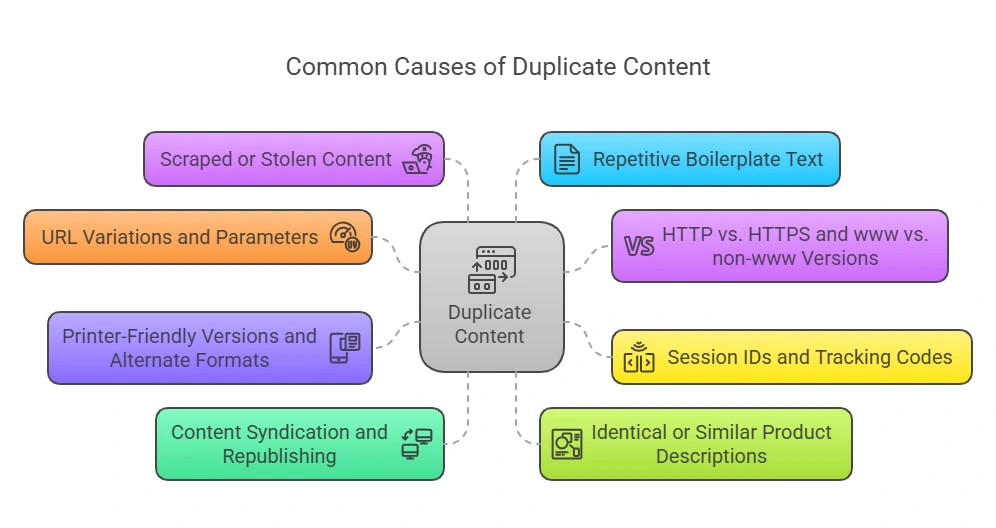
There are several common reasons why duplicate content appears on websites. One major cause is URL variations, where multiple URLs display the same content due to tracking parameters, session IDs, or HTTP and HTTPS versions. Printer-friendly pages and
mobile-friendly versions can also create unintentional duplication if not properly managed. Another common issue is content syndication, where businesses republish their content across different platforms without implementing proper canonicalization. Additionally, scraped content—when other websites copy and republish content without permission—can cause external duplication issues. Understanding these causes helps businesses take proactive measures, such as using canonical tags, setting preferred domain versions, and regularly checking for duplicate pages through SEO audits.
Using Canonical Tags to Resolve Duplicate Content
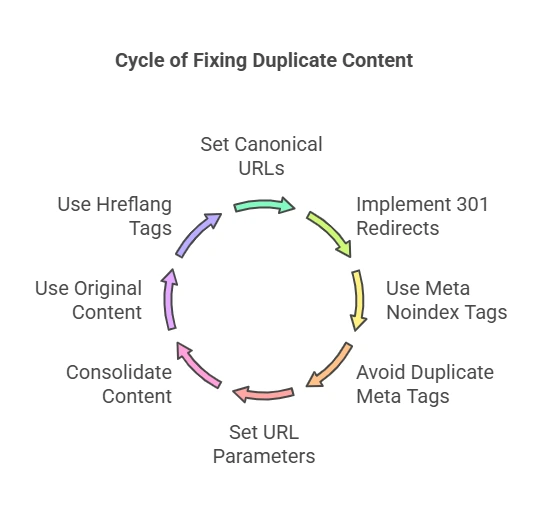
Canonical tags are a powerful SEO tool used to prevent duplicate content issues. These tags inform search engines about the preferred version of a page when multiple similar versions exist. By implementing a canonical tag (rel=canonical) on duplicate pages, search engines consolidate ranking signals and direct SEO value toward the main page. This helps prevent
duplicate content penalties while ensuring that the correct page appears in search results. eCommerce websites, which often have similar product pages with slight variations, benefit significantly from proper canonicalization. However, it’s essential to audit canonical tags regularly to ensure they are correctly implemented and pointing to the right pages. Without proper use, canonical tags may not function as intended, potentially causing indexing issues.
301 Redirects: A Powerful Tool for Duplicate Content Fixes
A 301 redirect is a permanent redirection method used to merge duplicate content pages and improve SEO. By redirecting duplicate pages to a single authoritative URL, businesses can consolidate link equity, avoid content dilution, and improve user experience. This method is particularly useful when merging outdated pages, fixing URL inconsistencies (e.g., HTTP vs. HTTPS), and addressing www vs. non-www versions of a website. Properly implementing 301 redirects helps search engines index the right pages and maintain SEO rankings. However, excessive or incorrect use of redirects can slow down website performance, so it’s important to apply them strategically.
Creating Unique and Valuable Content
The most effective way to avoid duplicate content issues is to create unique and high-quality content. Search engines prioritize originality, so businesses must invest in writing distinctive blog posts, product descriptions, and landing pages. In eCommerce, it’s essential to avoid using manufacturer-provided descriptions, as these are often duplicated across multiple sites. Instead, crafting custom content that provides added value to users can improve rankings and engagement. Additionally, plagiarism detection tools like Copy scape and Grammarly can help ensure content remains unique. Updating older content with fresh insights also signals search engines that a site is active and relevant, boosting SEO performance.
Monitoring and Preventing Duplicate Content Issues

Regular monitoring and audits are essential for identifying and preventing duplicate content issues. SEO tools like Google Search Console, Screaming Frog, and Copy scape help detect duplicate pages and provide insights for corrective actions. Setting preferred domain versions in Google Search Console ensures that search engines recognize the right version of a website.
Additionally, optimizing URL structures and avoiding unnecessary tracking parameters prevent unintended duplication. Continuous monitoring, combined with best SEO practices, ensures that a website remains authoritative and free from duplicate content penalties.
FAQS:
Why is duplicate content bad for SEO?
Duplicate content confuses search engines about which version to index and rank. This dilutes your page authority and can hurt visibility in search results, leading to lower traffic.
2. Can duplicate content result in a Google penalty?
While Google rarely penalizes unintentional duplicate content, it can still negatively impact your rankings by splitting ranking signals and reducing content performance.
3. How can I identify duplicate content on my website?
Use tools like Copy cape, Sideliner, or SEMrush to scan for duplicate content. Google Search Console can also show indexing issues caused by duplicates.
4. What is a canonical tag and how does it help with duplicate content?
A canonical tag tells search engines which version of a page to consider as the original. It consolidates link equity and prevents duplicate content issues across similar URLs.
5. How do I fix duplicate content on my site?
Fix duplicate content by rewriting similar pages, using 301 redirects, applying canonical tags, and consolidating overlapping pages into a single authoritative version.