Marketing is a process, or a set of processes used to understand the target audience better. It develops a valuable offering communicate and deliver value to satisfy the needs. It wants desires of the target audience at a profit. In simple terms, marketing is an umbrella that includes. Here we explore what Is Marketing? Principle Types & Scope.
What Is the Purpose of Marketing?
Contrary to what most people believe, the purpose of marketing isn’t limited to selling the offering. Considering there are seven functions of marketing ranging from product development to pricing to selling. So, marketing pertains to all aspects of the business and works on fulfilling the three core purposes of the business –
- Identification of the goals and needs of the customers,
- Development of offerings that provide value to the customers, and
- Communication and sale of the product to earn profit.
What Is the Importance of Marketing?

Marketing is essential because it helps the business consider the customer as its focal point and develop a sustainable business that provides value to society. It is the heart of the business which collects information from the outside, filter it, and convert it into specialized strategies which help the business fulfil the customer requirements while making profits. Marketing is important because it flows among all the departments of the business including product development, distribution methods, sales, and advertising, and makes the business follow a holistic approach –
- It enquires: It is through market research that business understands the actual needs, wants, and desires of the customers.
- It builds: Marketing helps the business produce what is actually needed in the market.
- It informs and engages: Communicating about the brand and the offering is a huge role that marketing plays.
- It sells: Marketing is important because it helps the company to sell its offerings. It helps the company to make money by attracting customers, making them buy the offering, and reaching the set end goals.
- It sustains: Marketing makes sure the company and its offering sustain for the long run by adapting to the changes in the business environment.
- It builds identity: Marketing builds identity.
- It grows: Marketing is an essential function to ensure the smooth growth of the business. It helps the business expand its customer base, increase sales, and build a brand.
What Are the Objectives of Marketing?
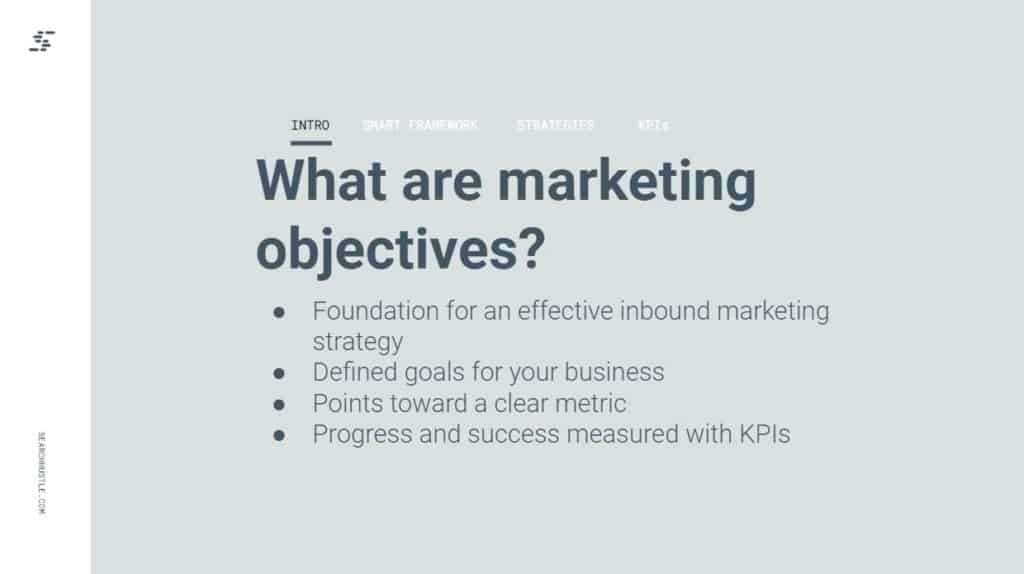
The main objective of marketing is to fulfil customers’ demands while making profits. Besides this, the other five objectives of marketing are –
- Customer Satisfaction: Satisfying the needs, wants, and demands of the customers.
- Profitability: Earning profit for the business to support sustainable growth.
- Demand Creation: Develop demand for the offerings by communicating about it to the target audience.
- Brand Development: Building a brand out of the company and/or the offering and differentiating it from other players in the market.
- Create Goodwill and Public Image: Building up a public image of the brand and increasing its equity by providing offerings with a consistent brand promise.
The Four Principles of Marketing
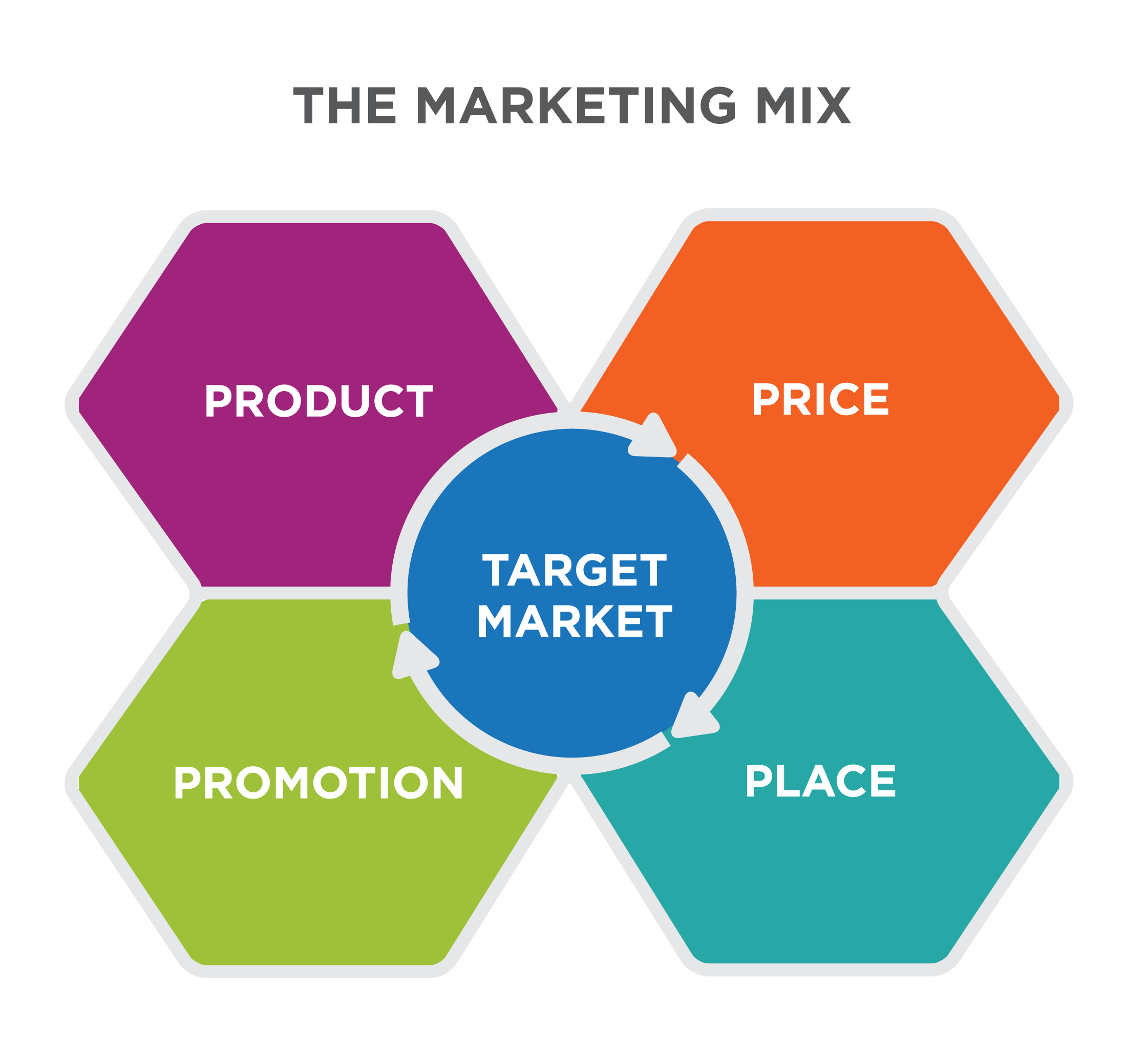
Since marketing is the sum total of all the activities involved in the transfer of the goods from the seller to the buyer, it relies on four basic principles. These principles, also called the 4 Ps or the marketing mix, are –
- Product: It is the offering that the company sells or intends to sell.
- Price: It is how much the company charges from the customer for the offering.
- Place: It refers to the point of sale – the place where the offering is offered for sale.
- Promotion:It encompasses all the marketing communication strategies to communicate and persuade the customer to buy the offering.
These four principles form the pillars marketing stands on. These principles give way to the core functions of the marketing too –
- Developing an offering that the market needs
- Pricing the offering by predicting the perfect balance of product value and the customer’s paying capacity, to maximize profits.
- Using the right distribution channels to distribute the offering
- Communicate about the brand, brand message, offering, and offering’s USP to increase sales.
Nature Of Marketing
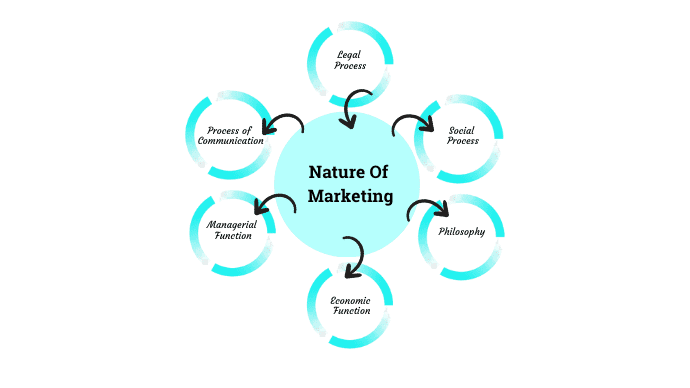
Marketing is considered to be holistic in nature. While there is usually a focus on a particular goal, marketing tries to make use of a 360-degree approach to fulfil the goal.
- Managerial Function: Marketing is a process that requires officials to manage product, place, price, and promotion of the business in a holistic manner.
- Economic Function: Earning profit and developing a sustainable business is a crucial objective of marketing.
- Social Process: Marketing is a social process that results in the parties obtaining what they need through the creation and exchange of offerings and values.
- Consumer-Oriented: Marketing revolves around fulfilling the needs, wants, and demands of the customers and earning profits in the process of doing so.
- Both Art and Science: It is science as it requires the marketer to understand customer behavior and art as it involves using this knowledge along with skills to create the demand for the offering.
- Goal-Oriented: Marketing revolves fulfilling the goals of the business by aligning it with the customers’ goals.
- Interactive Activity: Marketing involves the marketer to actively interact with the audience at all stages of the business.
- Dynamic Process: It makes sure that the business keeps at pace with the changing business environment, trends, and demands of the customers.
- Creates Utility: Marketing aims at providing utility to the customer through four different means – offering (kind of product or service), time (whenever needed), place (distribution availability), and possession (ownership).
Types Of Marketing Scope Based on Entities Marketed

Most people mistake types of marketing strategies to be types of marketing. They both differ. Types of marketing strategies refer to the ‘how’ of marketing – how an offering is marketed. Types of marketing, however, focuses on the ‘what’ of marketing – what is marketed. Marketing isn’t limited to just physical goods. Today, even human, places, and experiences are marketed.
- Product Marketing: Tangible offerings manufactured in bulk and requiring proper marketing to make it available to the right customer at the right time. Example – mobile phones, televisions, etc.
- Service Marketing: Intangible activities that can’t be separated by the provider. Example – hotels, airlines, barbers, etc.
- Event Marketing: Time based events like trade shows, artistic performances, etc.
- Experience Marketing: An orchestrated mix of services and goods which leads to an experience. Example – amusement park experience, foreign trip experience, etc.
- Person Marketing: A person known for his skills, profession, art, experience, etc. Example – Ronaldo, Michael Jackson, etc.
- Place Marketing: Places, cities, states, and countries with an aim to attract potential investors and/or tourists. Example – Hawaii.
- Property Marketing: Intangible rights of ownership of the real estate, stocks, securities, debentures, etc.
- Organization Marketing: Corporations and not for profit organizations like schools, colleges, universities, NGOs, etc.
- Information Marketing: Information related to healthcare, technology, science, media, law, tax, market, finance, accounting, etc. offered by books, schools, universities, websites, media houses, etc.
- Idea Marketing: The basic ideas that result in the entity, offering, etc.
Scope Of Marketing
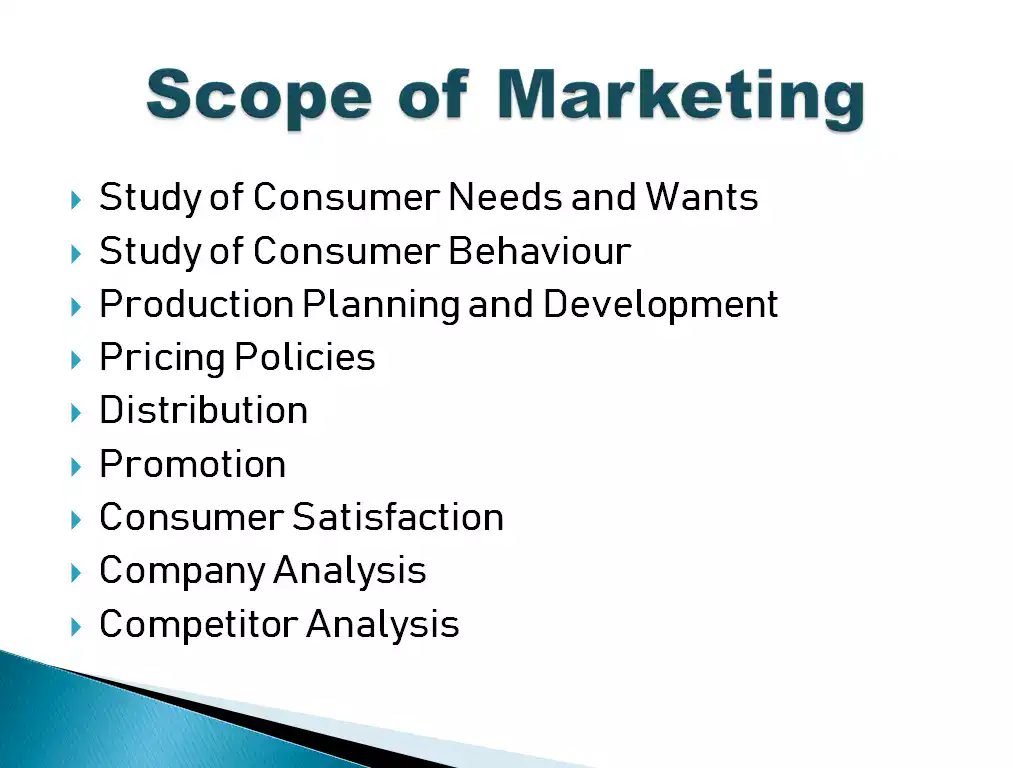
When compared to other functions of the business, marketing’s scope seems to be a bit vaster. It flows within almost all of the business activities and present at all stages of the customer buying cycle. Even a separate type of marketing, known as digital marketing, has evolved to expand the scope of marketing over the internet.
- Market Research: Researching consumer demands and consumer behavior.
- Product Planning and Development: Planning and developing the offering according to what’s needed in the market.
- Product Pricing: Pricing the offering according to the product value and the buyer’s paying capacity to maximize profits.
- Distribution: Distributing the offering, so it is available wherever and whenever the customer demands it.
- Promotion: Communicating the right message that results in demand creation.
- Sales: Offering incentives that increase sales.
- After-Sales: Providing after-sales support to the customer to maintain a good brand image in the market.