In the digital marketing world, there are some distinct platforms that companies want to leverage to grow their company. For example, we all know the importance of SEO efforts in order to rank well in organic search queries on Google. This is one of the most understated things in the marketing world. Regardless of industry, consumers start their buying process by researching products or services on Google. However, for e-commerce companies, then Amazon is stealing some of the search queries. Here we explore how Amazon Keyword Tools Differ from Google.
Google vs Amazon Keyword Research
Typically, content marketers and SEO start any keyword research with Keyword Planning that Google offers. After all, the aim of content marketing and SEO remains focused on improving Google SERP rankings. So, intuitively, it makes sense to leverage information and data provided by Google! Keyword research seems straightforward, but it is very time consuming to do properly. For example, effective SEO keyword research requires lots of planning and strategic thinking.
How does Amazon work?
Amazon is a popular online marketplace. In fact, 90% of shoppers check Amazon even if they’ve found the product elsewhere. Though Amazon is strictly for e-commerce, a huge population turns to Amazon for product search. Therefore, it’s essential for sellers to list the products in a way to earn more conversions. Amazon search engine ranking is self-contained. It is only influenced by how the products are perceived by customers and the sales generated on Amazon. It is not dependent on how your website performs. Most of the factors influencing Amazon SEO are customer-centric like:
- Relevant customer search terms
- Conversions
- Reviews
- Ratings
How does Google work?
For most people, Google is synonymous with SEO. After all, it’s the largest search engine on the planet. Just like Amazon, Google uses keywords to rank search results. However, the factors influencing Google’s search algorithm are different from Amazon.
Here are a few factors driving Google’s SEO algorithm:
- Backlinks to your website or blogs
- Number of clicks to your websites
- Page speed
- Domain authority
Amazon vs Google: Major differences
Keywords
One of the major differences between Amazon and Google is keywords. If you want to rank your blog or landing page on Google, you need to follow a set of best practices like:
- Focus on the long-tail keywords that enable quality traffic
- Maintain good keyword density, meaning, repeat the keyword several times on your page (preferably in the title and sub-headings)
- Optimize your images on the page according to the keywords
- Use the keywords in the meta description
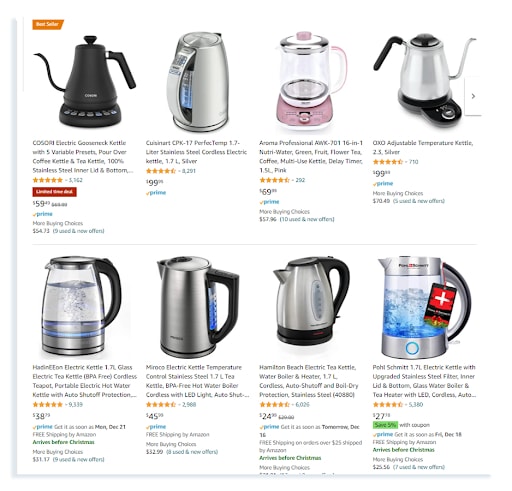
On the other hand, keywords on Amazon work in a different way. Users will not use long questions to search for a product. The main keywords and long-tail keywords are purely product-focused – keywords that talk about the product’s benefits and features and cater to the top and bottom of the funnel.
External links
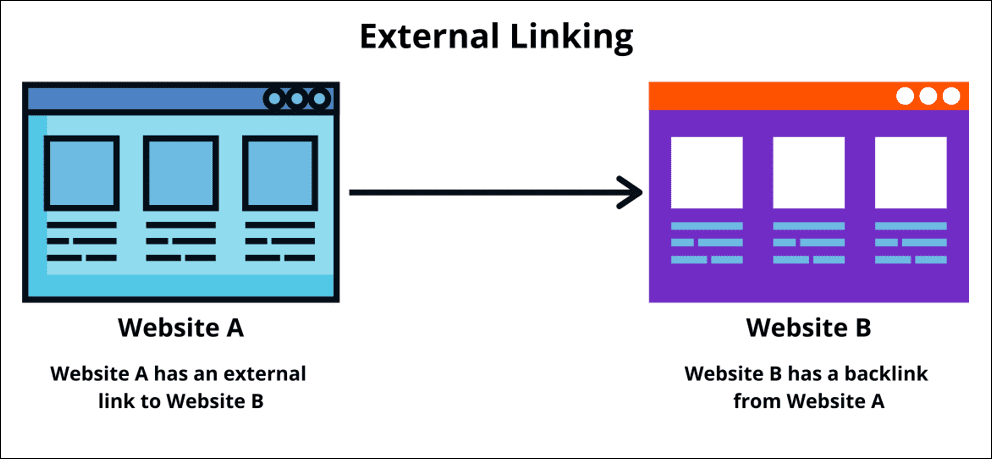
Having external links is one of the driving factors of Google SEO. The more quality links you have to your page, the higher your authority gets. Simply put, quality links determine the domain authority of your website. Thus, it helps to secure top ranks in the SERPs. On the contrary, Amazon’s search engine does not include backlinking. In this case, the sales volume of the product plays a dominant role in the product ranking. While you can’t use links in your listings to improve your product’s performance on Amazon, you can use them in a different capacity.
Top Amazon Keyword Tools
Fortunately, specialized Amazon keyword tools exist! These software solutions offer tools for SEO specialists to find keywords for a variety of platforms, but also unique options for Amazon. As companies lean into Amazon (and Amazon increasingly grows in importance to the e-commerce world), test each of these (and other) products that fit your work process.
Jungle Scout
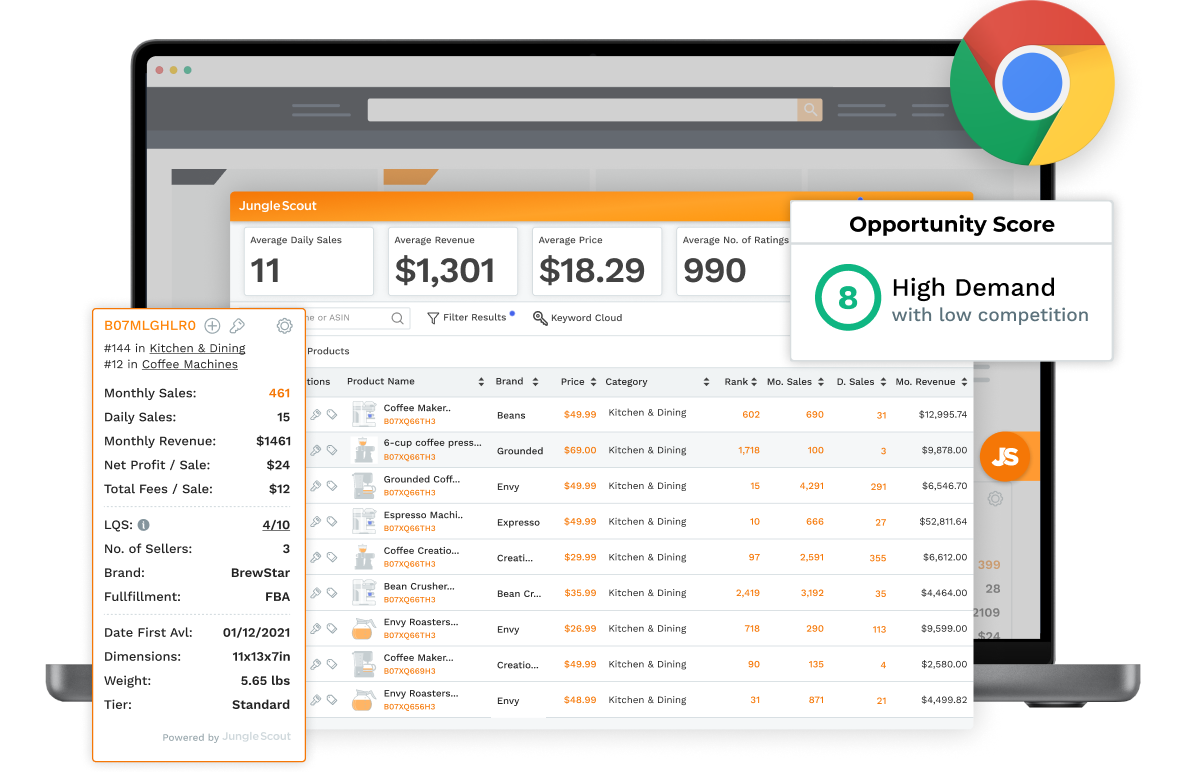
Jungle Scout helps companies improve their Amazon business. As a result, they developed Keyword Scout, which helps companies see what shoppers are really searching for on Amazon. Keyword Scout enables reverse-search ASINs to discover the keywords competing products are using, and which keywords products rank for.
Keyword Tool
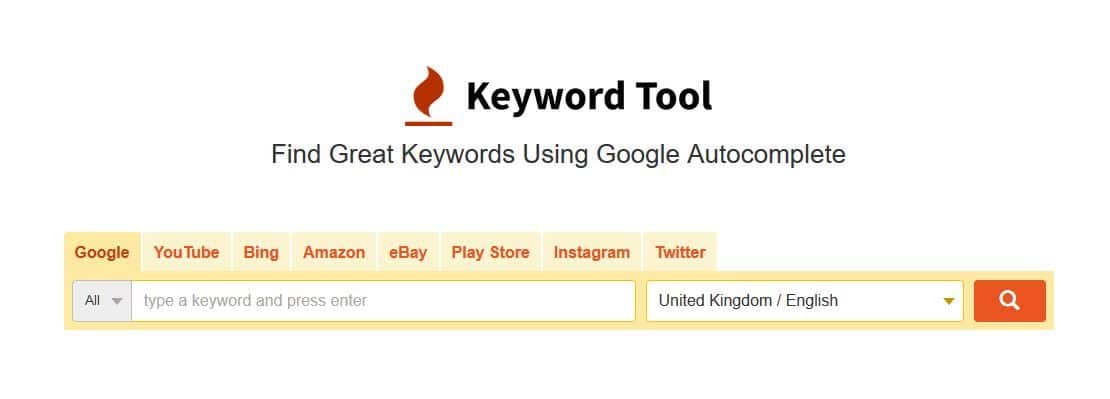
Keyword Tool provides a simple UI and offers straightforward suggestions for all of the leading search engines. As a result, Keyword Tool works well for new SEO specialists and yields high level insights into preliminary search terms that help get you started. Additionally, Keyword Tool offers a free and paid version, which means as you go down the Amazon rabbit hole, this tool provides additional options for you to grow and gain more insights.
Merchant Words

Merchant Words is another software provider that helps companies grow their Amazon-based businesses. As a result, Merchant Words developed Keyword Advisor that provides an accurate and easy to use list of Amazon-related search terms. The terms allow SEO specialists to create product listings, along with discovering new niches within the Amazon ecosystem.