The first step for a successful SEO strategy is to find the right keywords to target in your campaigns. Our comprehensive checklist will help you perform keyword research like a pro and discover valuable keywords to fulfill your business goals. Here we discuss keyword Research Checklist For SEO.
1. Define Your Goals and Target Audience

Before getting your hands dirty, you should clearly define what you want to achieve with your keyword research. Is your goal to increase organic traffic, generate more leads, or increase sales. Understanding your specific goals will help you choose the right keywords, as we’ll see in step 9 below. For example, if your primary goal is to get more traffic from Google, you might focus on keywords with a decent search volume and low keyword difficulty.
2. Choose a Keyword Research Tool
![Top Keyword Research Tools for SEO [Free & Paid] - TopDevelopers.co](https://www.topdevelopers.co/blog/wp-content/uploads/2.-Top-Keyword-Research-Tools-Free-and-Paid-1.jpg)
To perform keyword research, you need to use free and paid tools. The free tools include:
Google Keyword Planner – has data directly from Google. You can use it to find keywords for your SEO and PPC campaigns. Use our Google Keyword Planner tutorial to learn how to use this powerful tool.
Google Trends – use this tool to find trending topics before they become too popular.
Google Search Console – although not a keyword research tool, you can use GSC reports to see which keywords generate the most traffic to your website and create related content. Read our beginner’s guide to Google Search Console to get started
Semrush – one of the best tools in the market for years. Recently, they added a cool AI feature that suggests keywords your domain will likely rank for.
Aherfs – one of the most reliable and respected keyword research and analysis tools.
SERanking – a good alternative to Semrush and Ahrefs without the high cost.
3. Identify Your Primary Keywords
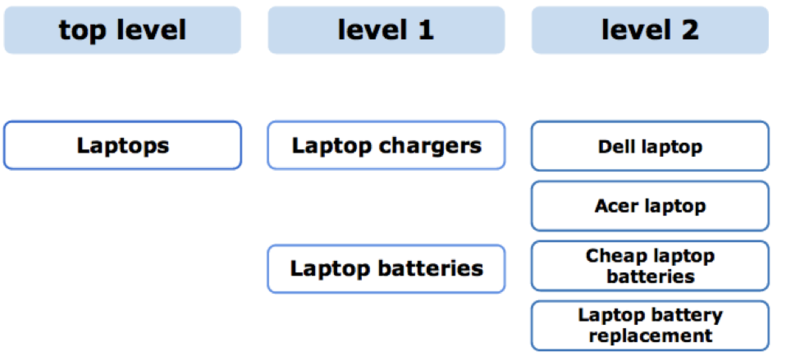
The next step is to start brainstorming your seed keywords, which are phrases related to your brand and the products and services you’re selling. Start by writing down what you want your brand to be known for, then draft a list of related keywords. For example, we provide online courses and want to become the go-to resource for digital marketing training. Based on that, our primary keywords include:
- “digital marketing”
- “digital marketing courses”
- “digital marketing training”
- “learn digital marketing”
- “start digital marketing career”
4. Discover Related Keywords
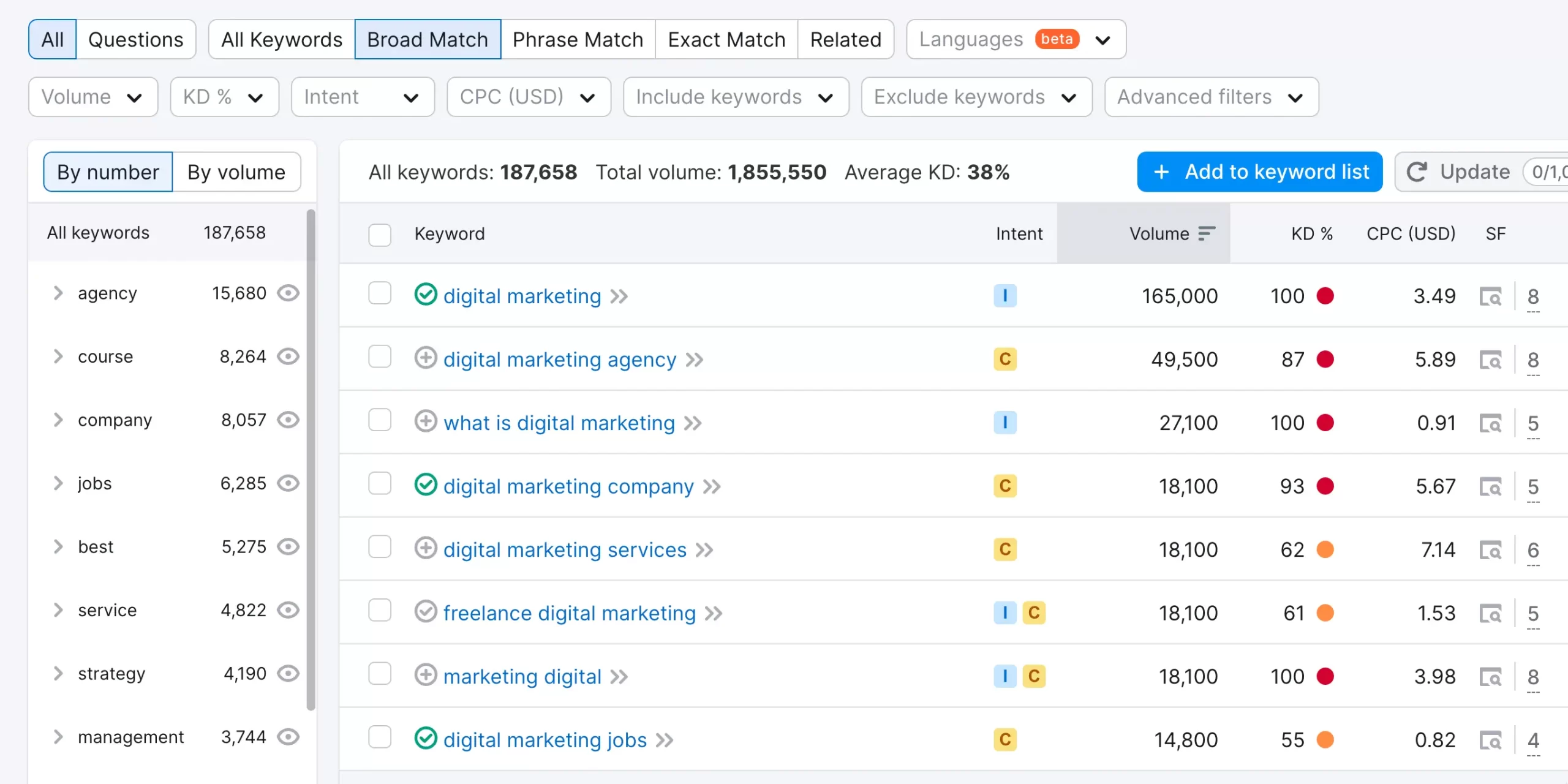
To broaden your list and discover other keywords you might have missed, take your seed keywords and enter them into a keyword research tool. You can then use different filters to group keywords by topic, volume, difficulty, and other metrics. Repeat the process for all your primary keywords and create a mega list of keywords related to your business.
5. Find Long-Tail Keywords
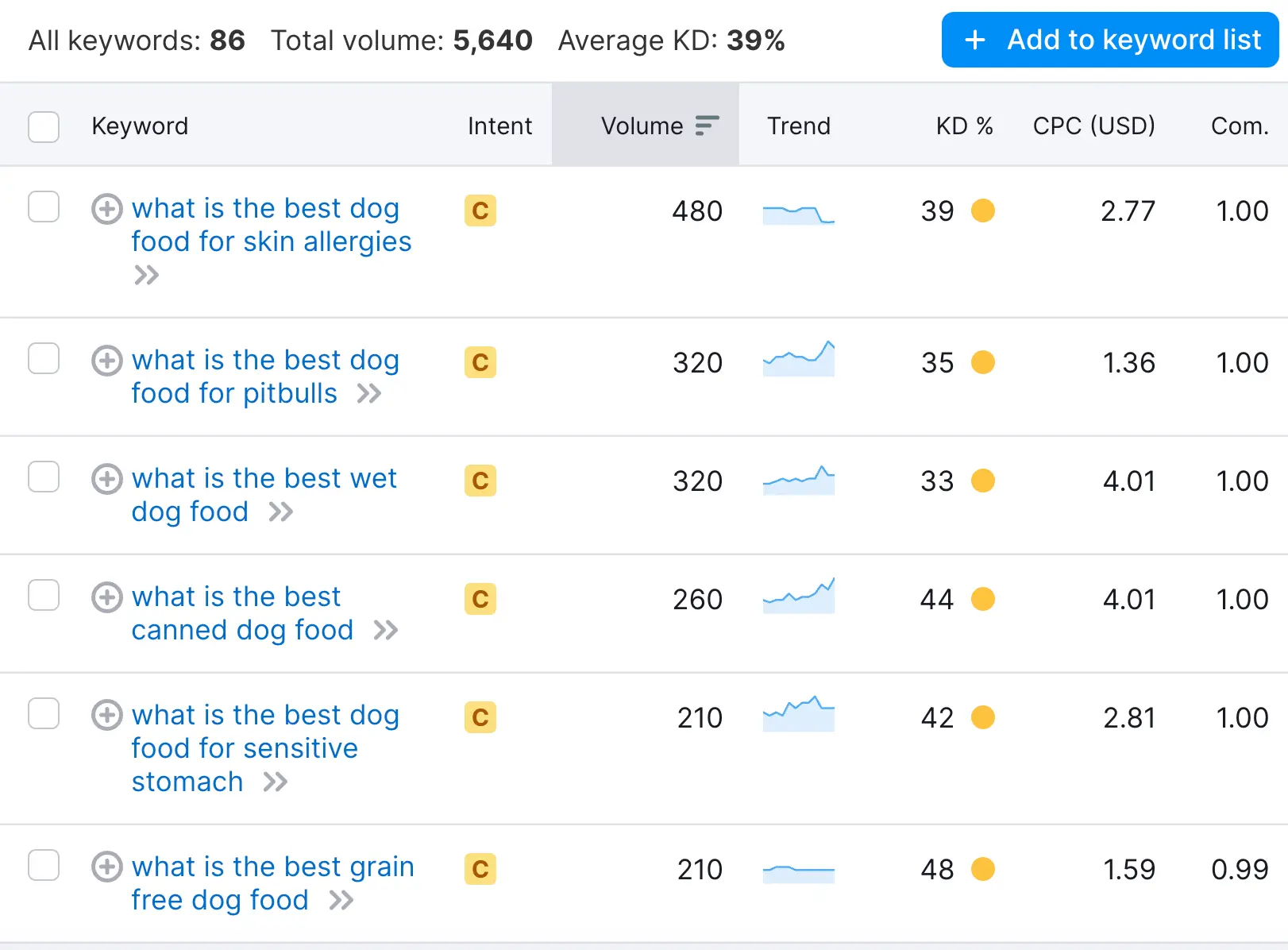
Your seed and related keywords are likely high competition and, thus, difficult to rank for. You must enrich your list with long-tail keywords to increase your chances of getting high rankings and traffic from search engines. Long-tail keywords are usually search queries consisting of more than 2 words with specific intent. They are searched less often than primary keywords but have a higher conversion rate and less competition. You can find long-tail keywords by sorting your keyword list by search volume and keyword difficulty.

You can also ask ChatGPT to propose a list of long-tail keywords for your seed keywords and analyze them using a keyword research tool to determine their search volume and keyword difficulty.
6. Find Trending Keywords
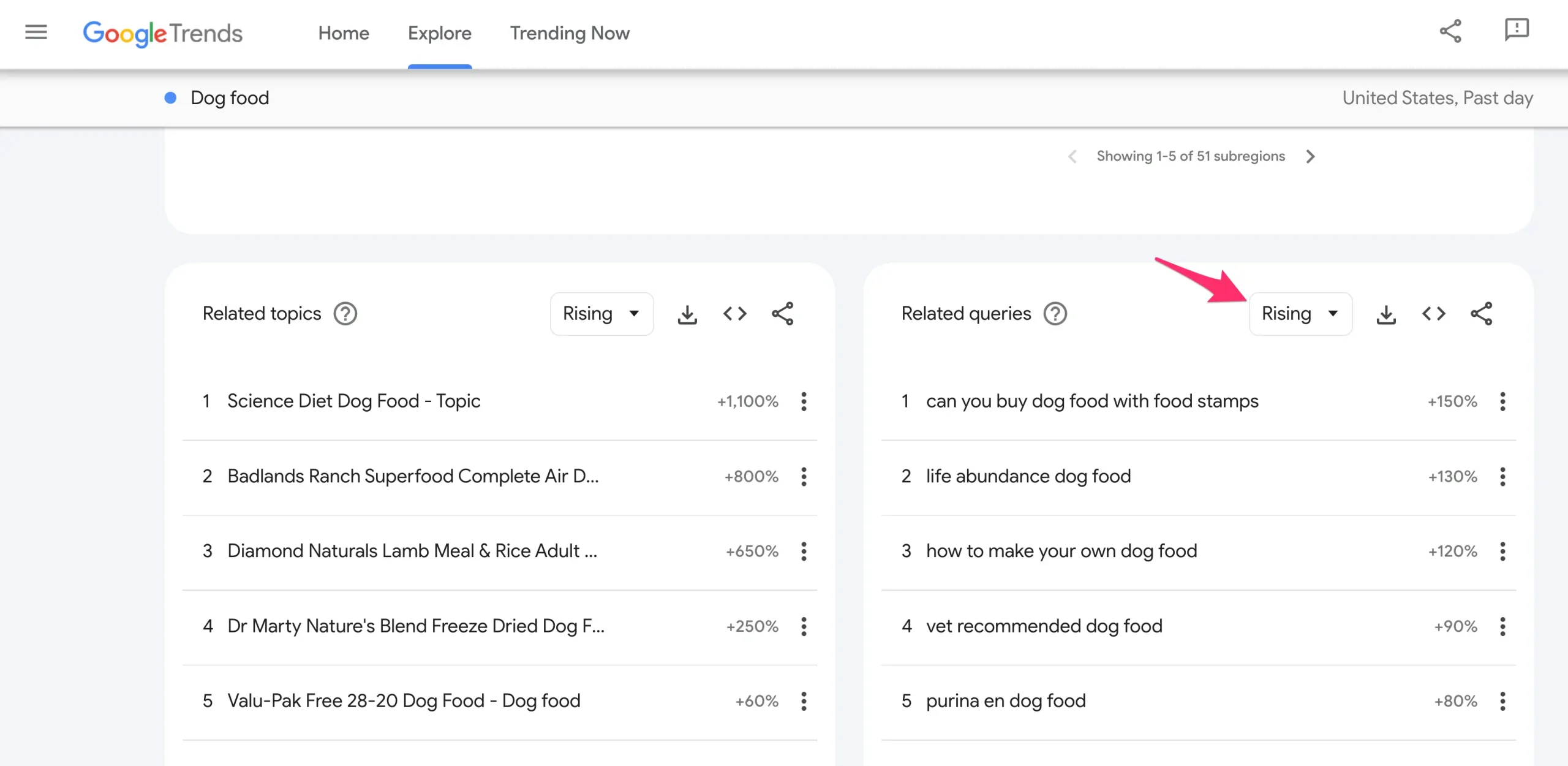
While doing keyword research, it’s worth examining currently trending keywords and topics that are getting attention but are not yet oversaturated. The easiest way to do this is to go to Google Trends and search for your seed keywords. Set the location to match your area of interest and look for rising topics. As the screenshot above shows, there are always new opportunities, even in highly competitive niches. You can also use this guide to find trending topics on other popular platforms.
7. Analyze Your Competitor’s Keywords
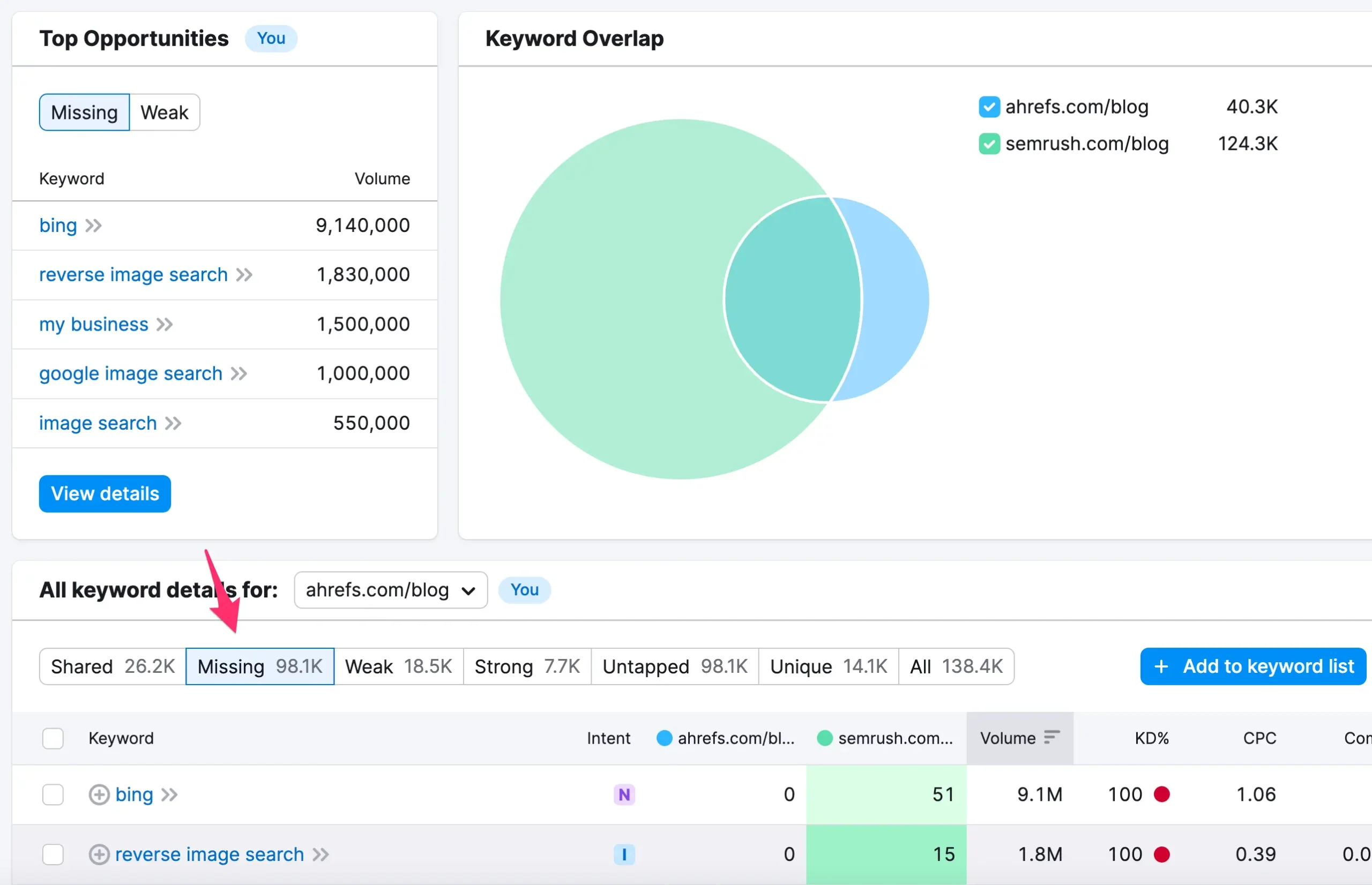
Another way to enrich your keyword list is to get ideas from competitors. You can get detailed metrics about the SEO performance of their campaigns and see which keywords they are targeting and missing from your lists. If you’re using Semrush, you can get this info using the Keyword Gap Report. It’s as simple as entering the domains you want to analyze and clicking the MISSING tab to find missing keyword opportunities.
8. Evaluate Keyword Metrics
I’ve mentioned keyword difficulty and search volume a few times above. Let’s see how these metrics impact your keyword research process.
Keyword Search Volume: Keyword search volume refers to the average monthly searches performed in Google (or other search engines) for a particular keyword. Most tools calculate this metric based on the average number of searches made in the last 12 months.
Keyword Difficulty (KD): Keyword difficulty is a metric given by SEO tools that estimate how difficult it is to achieve high rankings in Google for a particular keyword. The higher the KD score, the harder the ranking will be.
9. Examine The Search Intent Behind Each Keyword
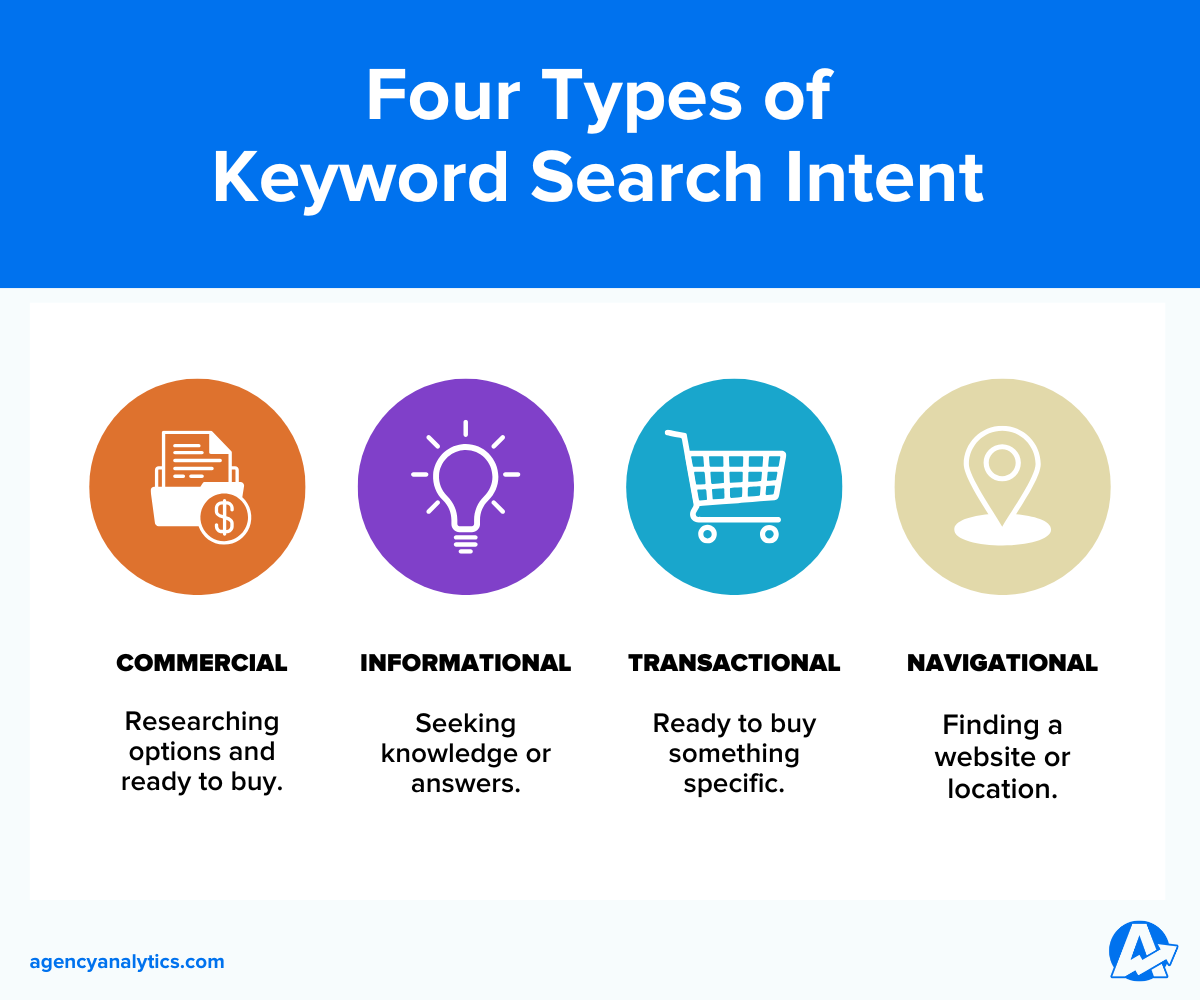
You should closely examine the search intent for each keyword in your list to determine two things:
- If it’s a good fit for your business goals.
- What kind of content to create to increase your chances of achieving a good ranking for the particular keyword.
To determine the search intent, you can use the classification provided by keyword research tools. In general, keywords are classified into:
- Navigational – people looking for a specific website.
- Informational – people looking for information, answers to questions, etc.
- Commercial – people looking for specific information about a brand, product, or service.
- Transactional – people are ready to proceed with a specific action, such as purchasing or signing up for a service.
You should also search for a keyword on Google and review the SERPs. Examine the top results and look for content type, format, angle, and depth.
10. Group Keywords Into Topic Clusters
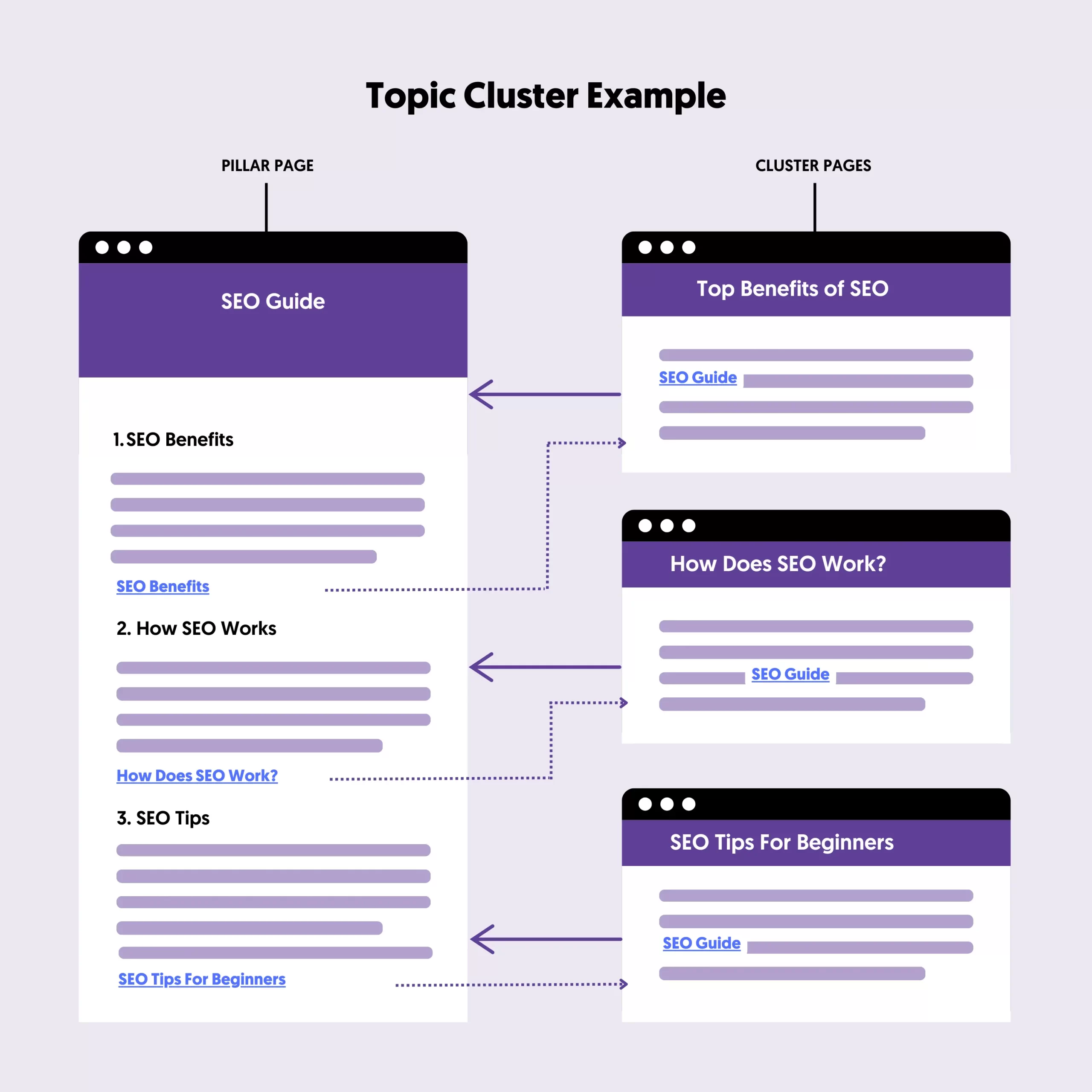
Keyword clustering is a technique that can help you rank for several related keywords that matter to your business. This approach helps create topical authority for particular topics and increases your chances of ranking for those keywords. The way it works is simple:
- First, you group related keywords together.
- Then, you identify your main keywords and create pillar pages.
- You then create cluster pages for the related keywords and interlink the pages together.
11. Prioritize Your Keywords
When you reach this point, it’s normal for your list to have many keywords. Some are organized into clusters, and others target specific topics that align with your business goals. While it would be nice to create content to target all keywords, in reality, it’s not so simple. Creating good content that can improve your rankings is the most difficult and time-consuming part of content marketing and SEO. To avoid this problem, you should prioritize your work.
Top-of-the-funnel: At this stage, users seek answers to their problems or general information. Keywords usually have high search volumes and competition, but they are great for raising brand awareness and introducing your brand to potential customers.
For example, “what is digital marketing”, “learn digital marketing”.
Middle-of-the-funnel: At this stage users are looking for specific solutions and considering different options. Search phrases are specific and include keywords like “best”, “top”, and “reviews”.
For example, “best digital marketing courses”, “best food for small dogs”, and “keyword research tools reviews”.
Bottom-of-the-funnel (BoFu): At this stage, users are ready to convert (purchase, sign up, subscribe, etc.). Keywords have a commercial or transactional nature and are considered high-intent.
For example, “ahrefs pricing”, “semrush review”, and “Coursera coupons”.

13. Monitor Your Keyword Rankings
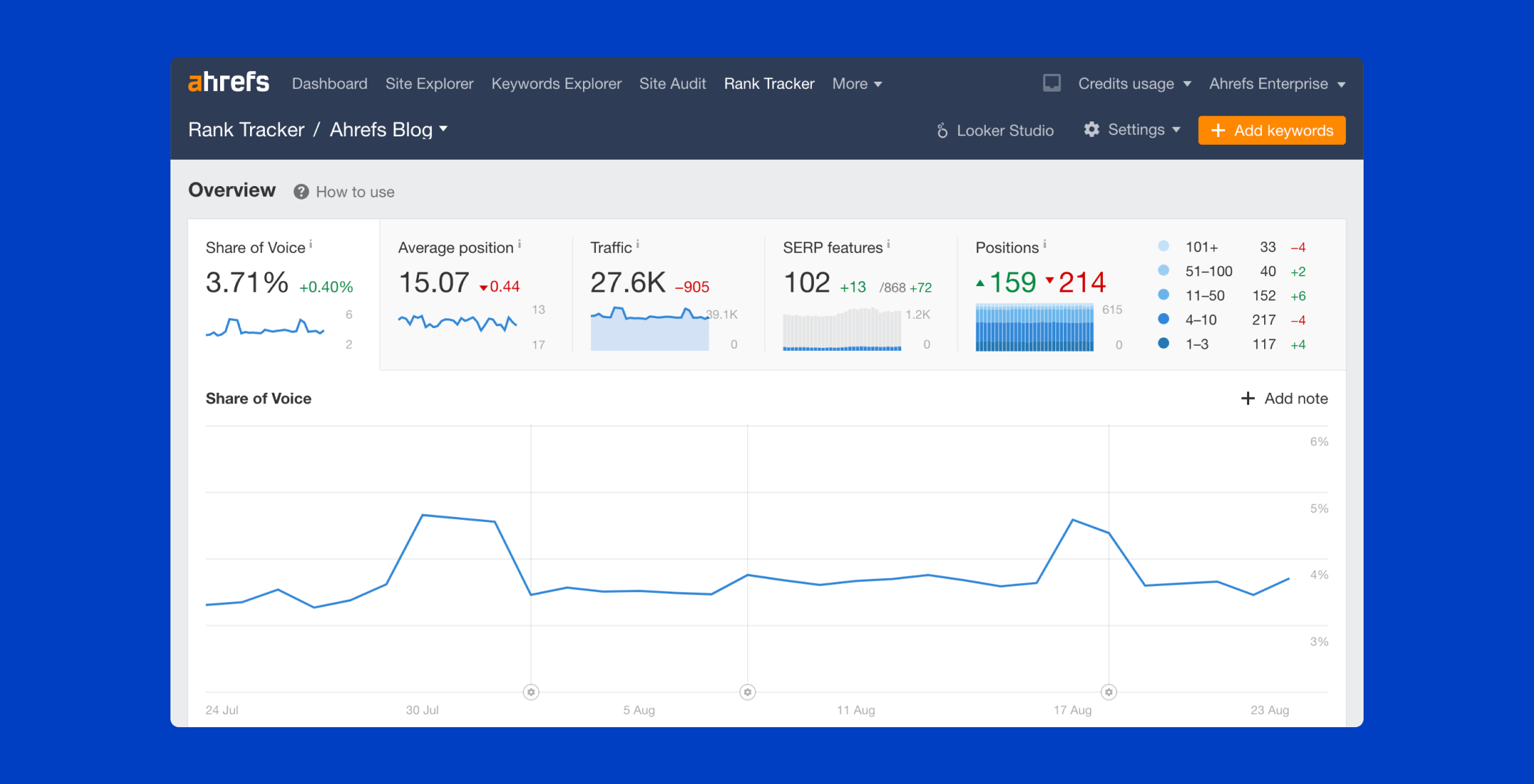
Keyword research is a continuous process and not a once-off task. You should regularly monitor your keyword rankings, see what’s working, and adjust your strategy accordingly. For example, if you notice that you get high rankings for keywords related to a particular topic, this is a sign that Google considers your website an authority on the subject, which means that you have more chances of ranking higher for closely related keywords.